





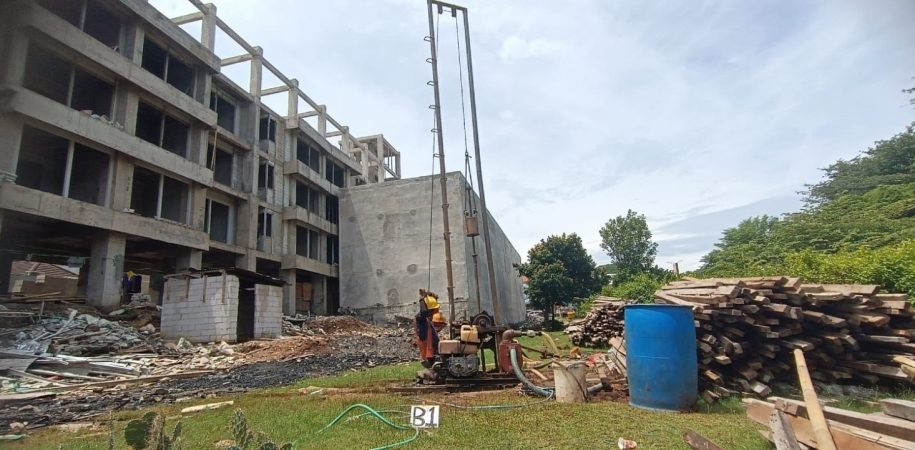

This article delivers a complete soil test guide for land owners in Bali, covering everything you need to understand before breaking ground on the Island of the Gods. Whether you are building a private villa, a commercial resort, or a residential compound, this knowledge will protect your investment at every stage of development.
Bali’s terrain is highly variable. From soft coastal alluvium along Seminyak and Canggu to volcanic ash layers in Ubud and steep limestone terrain in Uluwatu, no two plots of land share the same subsurface profile. A professional complete soil test guide Bali approach ensures that what lies beneath your land is never left to guesswork.
Why a Soil Test in Bali Is Always Relevant
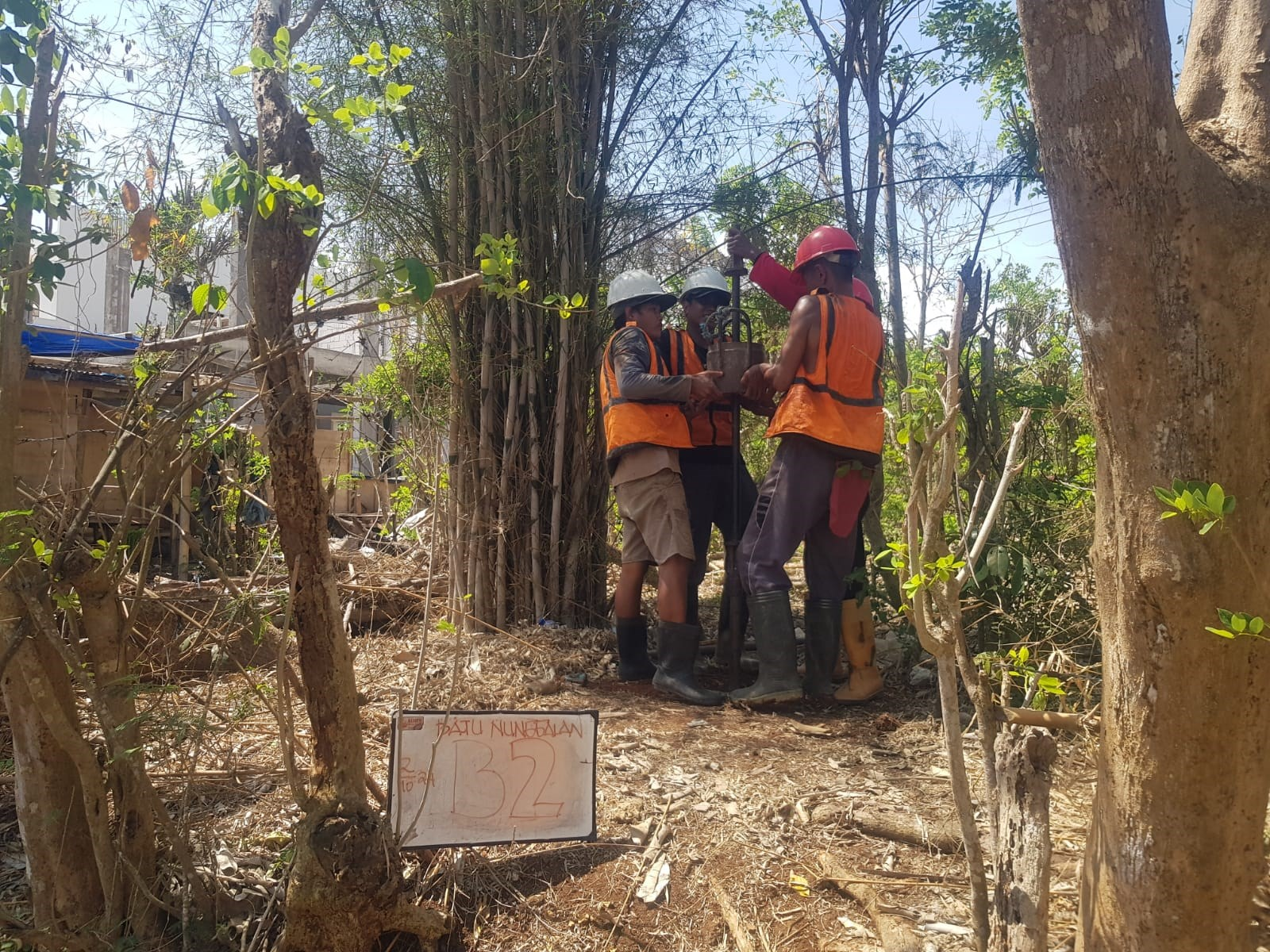
Soil conditions beneath your land do not change unless disturbed, but our engineering understanding of them must continuously be updated. Eurocode 7 (EN 1997-1), the international standard for geotechnical design, requires that ground investigation precede all structural design decisions. This rule exists because surface appearances give no reliable indication of what lies at depth.
Increasingly strict building permit requirements in Indonesia, including the SLF and PBG certifications, now mandate geotechnical data as part of the technical documentation. Every land owner in Bali who plans to build needs to understand the basics of a complete soil test guide Bali approach to protect both their structure and their legal compliance.
What Is a Soil Test? A Basic Guide Before You Build
What Is a Soil Test in Bali? A Practical Overview
Fundamental Concepts Every Bali Land Owner Must Understand
A soil test is a scientific investigation of the subsurface material beneath a plot of land. It determines the type, strength, and layering of soil, as well as the depth at which a stable foundation layer can be reached. The data obtained directly informs every foundation design decision your structural engineer will make.
The two most widely used methods in Bali are the Cone Penetration Test (CPT), also known locally as sondir, and the Standard Penetration Test (SPT), conducted through a borehole. According to ASTM D5778-20, the electronic friction cone and piezocone penetration test is the international standard for evaluating subsurface conditions with continuous, high-resolution data. The CPT pushes a cone-tipped rod into the ground at a steady rate of 20 mm per second, recording tip resistance and sleeve friction at every depth increment.
| Soil Test Method | Depth Range | Best Application | Standard Reference |
|---|---|---|---|
| CPT / Sondir | 0 to 30 m | Soft soil profiling, liquefaction risk assessment, stratification mapping | ASTM D5778-20 |
| Boring Test (SPT) | 5 to 30+ m | Deep foundation design, physical soil sampling for lab analysis | ASTM D1586 |
| Topographic Survey | Surface level | Slope planning, drainage design, cut-and-fill calculation | GPS / Total Station |
| Geoelectric (Resistivity) | 0 to 50 m | Groundwater detection, cavity mapping, subsurface anomaly identification | ISSMGE TC102 |
| Ground Penetrating Radar (GPR) | 0 to 5 m | Utility detection, buried object scanning, shallow subsurface mapping | ASTM D6432 |
Understanding CPT: Function and Procedure in Bali
Electromechanical vs Mechanical Sondir CPT in Bali
Core Principles That Never Change in Geotechnical Investigation
Regardless of location or project scale, two core principles govern every professional soil test engagement. The first is that investigation must precede design. Eurocode 7 explicitly states that geotechnical investigation must be completed before engineering design begins, not after. Skipping this step is non-compliant with international engineering standards and increases the risk of structural failure significantly.
The second principle is that surface observations are unreliable indicators of subsurface conditions. Flat land can conceal deep layers of soft clay or loose fill. According to the International Society for Soil Mechanics and Geotechnical Engineering (ISSMGE), the use of standardised in-situ tests such as CPT and CPTU has been internationally agreed upon precisely because visual assessment alone provides no engineering value for foundation design.
A third principle that applies specifically to Bali and Indonesia is seismic risk. USGS defines soil liquefaction as the phenomenon where saturated sandy soil temporarily loses strength during earthquake shaking. Bali sits within one of the most seismically active zones in the world. Without a complete soil test guide Bali approach that includes liquefaction assessment, structures on loose coastal or alluvial soils face catastrophic risk during a seismic event.
Ultimate Bali Soil Testing Guide for Coastal and Cliff Construction Projects
What Every Bali Property Investor Must Know About Soil Conditions
Practical Implementation: How to Conduct a Soil Test in Bali
Implementing a soil test correctly requires three sequential steps. First, you identify the characteristics of your land: its location, terrain, proximity to water bodies, slope angle, and any visible signs of soft ground or neighbouring structural damage. Second, you engage a certified geotechnical firm to select and execute the appropriate test method based on your site conditions and project type.
Third, you use the certified report to brief your structural engineer and architect. According to the FHWA Geotechnical Engineering Circular No. 5, evaluating existing site conditions and nearby structures is a standard part of any geotechnical investigation, specifically to identify settlement-prone zones and guide foundation type selection. This process is not optional for responsible construction.
In Bali, Indo Soil recommends a minimum of three CPT test points for plots up to 500 square metres, and a combined CPT plus boring investigation for sites exceeding one hectare or involving structures of more than two storeys. Every report is delivered within five to seven working days in both English and Bahasa Indonesia, in PDF and CAD formats.
Need a Soil Test in Bali? Talk to Our Team Today.
Indo Soil serves Bali, Lombok, NTB, and NTT. One free consultation helps you identify the right test method for your land and project type.
Tips from Experienced Geotechnical Practitioners in Bali
Practitioners who have completed over 100 projects across Bali and surrounding islands consistently share the same insight: the cost of a soil test is always lower than the cost of fixing a foundation problem after construction begins. Differential settlement, which is the leading cause of structural cracking in Indonesian construction projects, is entirely preventable when a complete subsurface investigation is completed upfront.
One practical tip is to always request that your CPT report includes a soil behaviour type classification. This classification, derived from the Robertson soil behaviour type chart used internationally in conjunction with ASTM D5778, allows your engineer to immediately identify whether shallow strip foundations, pad foundations, or deep pile foundations are appropriate for your specific site. Without this classification, foundation design relies on assumption rather than evidence.
Another tip is to conduct your complete soil test guide Bali investigation during the dry season wherever possible. Higher water table levels during the wet season can affect CPT readings in certain soil types, particularly in low-lying coastal areas. If you must test during the wet season, ensure your testing provider uses a piezocone to measure pore water pressure simultaneously.
Professional Soil Test Bali: Sampling Procedures Explained
How to Determine Optimal CPT Test Point Spacing in Bali
Common Mistakes and How to Avoid Them
The most common mistake among Bali land owners is ordering a soil test too close to a construction deadline. Ideally, geotechnical investigation should be completed two to three months before construction begins. This timeline allows your engineer and architect adequate time to incorporate the findings into the foundation design, avoiding costly redesign fees or on-site delays.
The second common mistake is choosing a testing provider based solely on the lowest price without evaluating report quality. A soil test report that lacks clear soil stratification diagrams, foundation recommendations, and bearing capacity calculations provides no engineering value. Every Indo Soil report includes all of these elements as standard, certified by experienced engineers and delivered in a format compatible with structural design software.
A third mistake is assuming that a test completed on an adjacent plot applies to your land. According to FHWA GEC No. 5, subsurface conditions can vary abruptly within short horizontal distances, particularly in geologically complex areas such as Bali. Each plot requires its own investigation.
10 Fatal Mistakes That Happen Without Soil Testing
How to Avoid Contractor Disputes Caused by Soil Issues in Bali
Indo Soil Service Packages and Pricing
Understanding the cost of a complete soil test guide Bali implementation helps you plan your project budget accurately. All Indo Soil packages include a certified report in both English and Bahasa Indonesia, delivered within five to seven working days. There are no hidden costs and no surprise fees after project completion.
| Package | Price (IDR) | Includes | Best For |
|---|---|---|---|
| Basic Soil Test | Rp 4,000,000 | 3 CPT points (0 to 5 m), PDF report, initial foundation recommendation in English and Bahasa Indonesia | Small villas, initial land assessment, shallow foundation planning |
| Business Starter | Rp 7,500,000 | 3 CPT points plus full topographic survey, PDF and CAD (DWG) output, complete technical report | Commercial projects, mid-size developments, permit documentation |
| Topographic Survey | Rp 4,500,000 | GPS / Total Station survey, DWG plus PDF output, spot levels and benchmark points | Slope analysis, drainage planning, cut-and-fill design |
| Custom / Large Project | Contact for quote | Boring test (SPT), geoelectric survey, GPR survey, slope stability analysis, full geotechnical report | Resorts, cliff sites, multi-storey structures, complex terrain |
Why Clients Choose Indo Soil for Soil Testing in Bali
How Soil Testing Protects Your Property Investment in Bali
Next Steps: How to Get Started with Your Soil Test in Bali
Taking the next step is straightforward. Begin by documenting the key characteristics of your land: its location, any proximity to coastlines or rivers, visible slope angle, and whether any neighbouring structures show signs of cracking or settlement. This information helps your geotechnical engineer select the most appropriate test method from the first consultation.
Next, engage a certified geotechnical firm with a proven track record in Bali. Indo Soil has completed over 100 projects and surveyed more than 3,000 hectares across Bali, Lombok, NTB, and NTT. Our team provides a free initial consultation with zero commitment required. Every engagement follows the sequence recommended by international standards, including Eurocode 7 and the ISSMGE in-situ testing guidelines: investigate first, then design.
Do not delay your complete soil test guide Bali implementation. Geotechnical data is the foundation of every safe construction project. Contact Indo Soil today and let our experienced engineers recommend the most appropriate soil test solution for your specific land and project.
Geotechnical Analysis for Luxury Cliff Villas in Bali
Soil Test and Slope Analysis in Carang Sari, Petang, Bali
Soil Test Investigation: Pecatu, South Kuta, Bali
Conclusion
A complete soil test guide Bali approach is not a luxury reserved for large developers. It is a fundamental requirement for any land owner who plans to build safely and legally in Bali. From understanding the basics of CPT and SPT to selecting the right service package and avoiding the most common mistakes, this guide has provided you with the knowledge to move forward with confidence.
Knowledge about soil testing is a long-term asset. With a thorough understanding of your subsurface conditions and the right geotechnical partner, you can build safely, avoid costly errors, and comply fully with Indonesian building regulations. Indo Soil is ready to be with you every step of the way, from the first consultation to the final certified report. Reach out to us today to begin.
Frequently Asked Questions
Q1: What does a complete soil test guide for Bali land owners include?
A complete soil test guide Bali covers the selection of the appropriate test method for your terrain, the execution of the field test, interpretation of results, and a certified report with foundation recommendations. Indo Soil provides all of these elements in one package, delivered within five to seven working days.
Q2: How long does a soil test take in Bali?
A standard CPT / Sondir test at three points can typically be completed within one working day on site. Report preparation and delivery by Indo Soil takes five to seven working days from the date of testing, depending on project complexity and the number of test points required.
Q3: Is a soil test legally required before building in Bali?
Yes. For obtaining building permits such as PBG and SLF in Indonesia, geotechnical data is required as part of the technical documentation submitted to local authorities. A certified soil test report from a professional firm such as Indo Soil directly supports this requirement.
Q4: What is the difference between CPT / Sondir and a boring test (SPT)?
A CPT pushes a cone-tipped rod into the ground continuously and records resistance at each depth, producing a detailed soil profile without extracting samples. A boring test drills a borehole and collects actual soil samples at intervals for laboratory analysis. CPT is faster and ideal for soft soil mapping, while SPT is used when physical samples and deeper investigation are required. Read more about CPT in Bali.
Q5: Can I use a soil test report from a neighbouring plot for my own project?
No. Subsurface conditions can vary significantly within short horizontal distances, particularly in geologically complex areas such as Bali. Each plot requires its own independent investigation. Using another plot’s report for your foundation design is not compliant with professional engineering standards and may result in incorrect foundation recommendations.
