





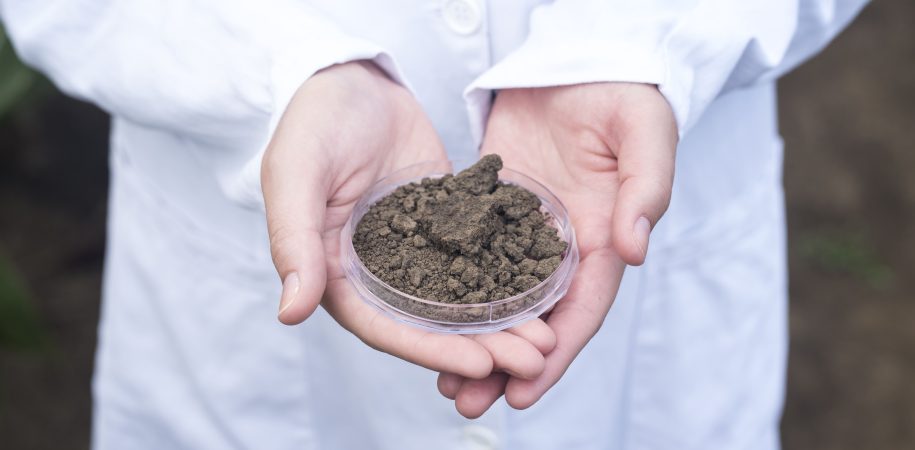

When you plan a construction project in Bali, the question of whether to conduct a soil test vs no soil test is not a matter of preference. It is a matter of structural safety, permit compliance, and long-term financial protection. This comparison article is here to help you make a data-driven decision: is the cost of a soil test truly worth it compared to the risks of building without soil investigation?
In regions like Bali, Lombok, and eastern Indonesia, ground conditions vary dramatically. Soft coastal alluvium, volcanic layers, and steep cliff terrain each demand a different foundation approach. Without reliable subsurface data, every design decision your engineer makes is essentially a guess.
Soil Test vs No Soil Test: Cost and Construction Risk Comparison in Bali
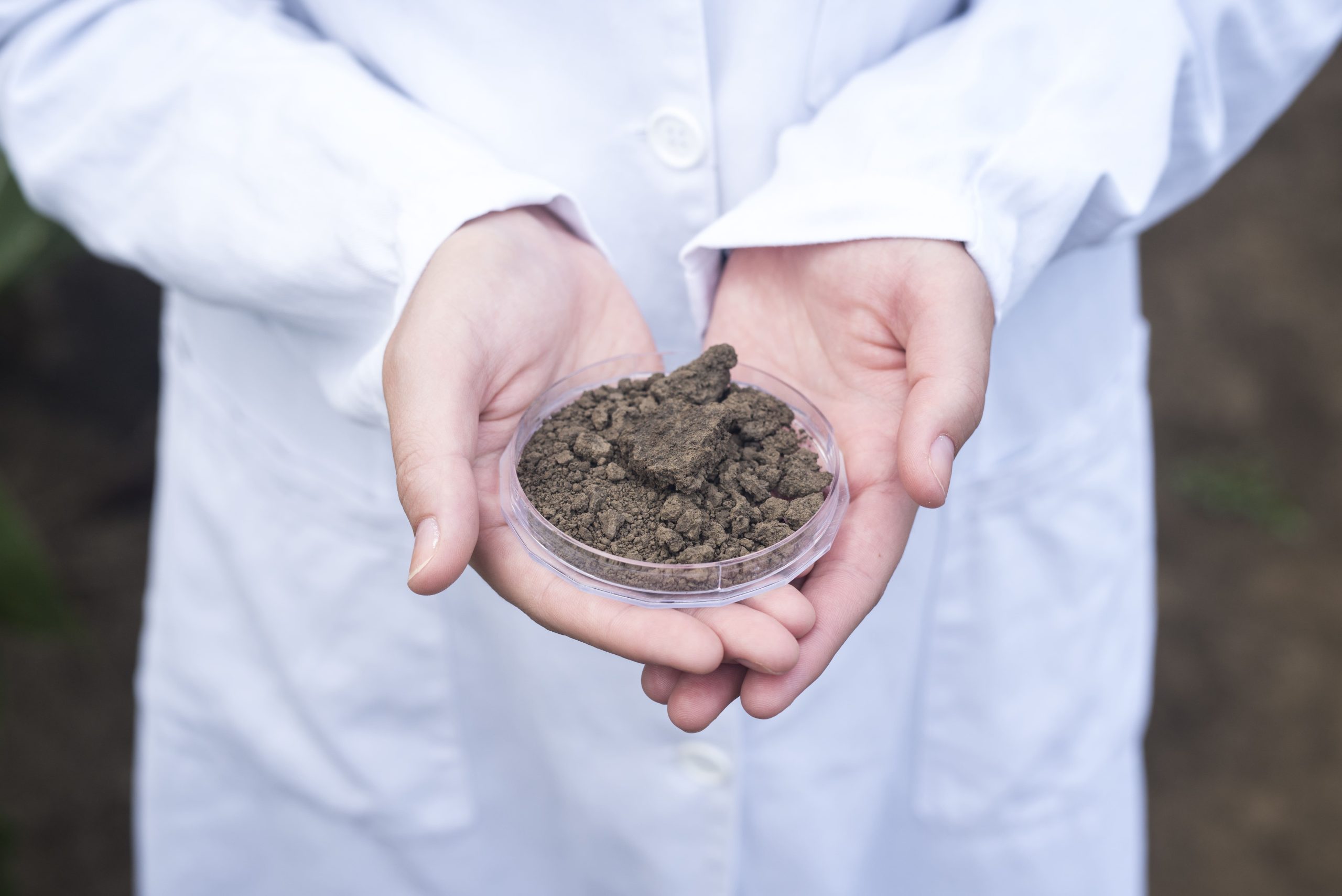
The debate around soil test vs no soil test often comes down to one question: how much risk are you willing to accept? Understanding both sides of this comparison clearly will help you protect your investment and ensure that your structure stands safely for decades.
#1: A Quick Look at the Two Approaches
Choosing between soil test vs no soil test defines the entire trajectory of your construction project. On one side, you have verified subsurface data that informs every design decision. On the other, you have assumptions and approximations that may fail under real-world load conditions.
According to Eurocode 7 (EN 1997-1), geotechnical investigation must precede design for all structure categories. This means that skipping a soil test is not merely a risk. It is a deviation from internationally accepted engineering practice. The standard requires that ground conditions be understood before any load-bearing decisions are made.
Furthermore, the International Society for Soil Mechanics and Geotechnical Engineering (ISSMGE) supports CPT as the leading in-situ test for subsurface characterisation. Therefore, any comparison of soil test vs no soil test must start with this fundamental framework.
| Aspect | With Soil Test | Without Soil Test |
|---|---|---|
| Foundation design basis | Based on verified subsurface data | Based on assumption or visual inspection |
| Risk of settlement | Identified and mitigated in design | Unknown and uncontrolled |
| Permit support (SLF/PBG) | Geotechnical report provided | Documentation incomplete |
| Structural safety | Engineer-certified and data-backed | Speculative and uncertified |
| Long-term cost | Predictable and controlled | Potentially catastrophic |
#2: Soil Test Cost vs Foundation Repair Cost
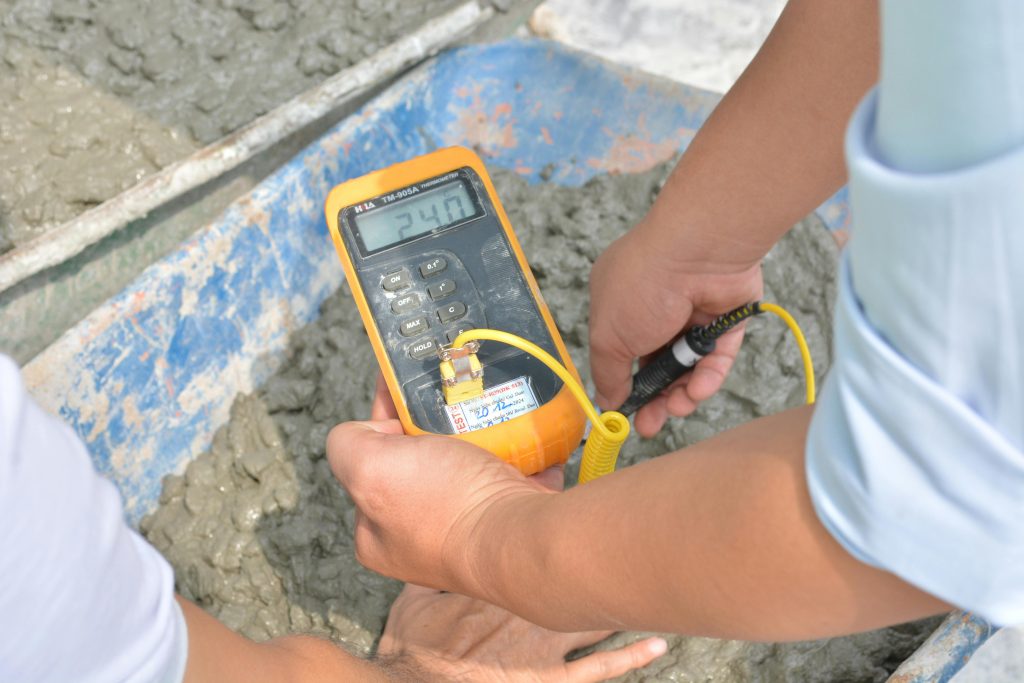
The financial argument in the soil test vs no soil test debate is where the data becomes most compelling. A standard CPT or Sondir test from Indo Soil starts at IDR 4,000,000 for a basic three-point investigation covering 0 to 5 metres. This is a relatively small upfront cost for any construction project.
By contrast, repairing a damaged foundation after construction can cost hundreds of millions of rupiah. Structural underpinning, crack remediation, and building stabilisation works are technically complex, disruptive, and rarely covered by standard contractor warranties. Additionally, if the damage affects neighbouring structures, the legal and financial liability compounds significantly.
According to the Federal Highway Administration (FHWA) Geotechnical Engineering resources, differential settlement is among the leading causes of structural cracking and failure in built infrastructure. Avoiding it requires data. The clear winner in the soil test vs no soil test cost comparison is always the test.
10 Fatal Mistakes That Happen Without Soil Testing
How Soil Testing Protects Your Property Investment in Bali
#3: Construction Risks Without Soil Data
Building without a soil test exposes your project to a range of risks that are both preventable and costly. The most common outcome is an incorrect foundation choice. Without knowing the bearing capacity at each depth, your engineer may specify a shallow foundation on ground that requires deep piling, or overdesign at unnecessary cost.
Beyond foundation choice, the risks include building subsidence, structural cracking along walls and slabs, rejection of SLF and PBG permit applications, and in severe cases, partial or total structural failure. These outcomes are not theoretical. They are documented in construction projects across Bali, particularly in coastal and volcanic soil zones.
As defined by ASTM D5778-20, the electronic friction cone and piezocone penetration test provides a detailed record of cone tip resistance. This data is the foundation of safe structural design. Without it, every load-bearing decision rests on uncertainty.
Understanding CPT: Function and Procedure in Bali
What Every Bali Property Investor Must Know About Soil Conditions
#4: Advantages of Building with Data
When you choose the soil test side of the soil test vs no soil test comparison, you gain something that no amount of experience or visual inspection can replace: verified subsurface data. This data allows your structural engineer to design a foundation matched precisely to actual ground conditions.
Indo Soil delivers CPT results that identify stratification layers, bearing capacity at each depth, and the depth to firm soil. This information directly reduces material waste, prevents overdesign, and gives your engineer the confidence to specify an optimal foundation type. Every design decision becomes traceable and defensible.
Additionally, ISSMGE technical committee research on in-situ testing demonstrates that CPT data supports accurate soil classification, liquefaction assessment, and engineering property estimation. This coverage is impossible to replicate through visual site assessment alone.
Professional Soil Test Bali: Sampling Procedures Explained
How Well Do Soil Test Recommendations Match Field Conditions?
Not Sure If You Need a Soil Test? Talk to Indo Soil Now.
One free consultation helps you understand whether your land requires testing and which method suits your project best. Indo Soil serves Bali, Lombok, NTB, and NTT.
#5: Impact on Permits (SLF/PBG)
In Indonesia, the Sertifikat Laik Fungsi (SLF) and Persetujuan Bangunan Gedung (PBG) require technical documentation that demonstrates structural safety. A certified geotechnical report from a professional soil testing firm is a core part of this documentation. Without it, your permit application is incomplete by definition.
Therefore, in the soil test vs no soil test debate, skipping the test does not save time. It creates a compliance gap that delays or blocks the entire permitting process. Local authorities in Bali and across Indonesia expect subsurface data to be included in the technical submission for any permanent structure.
Indo Soil delivers certified reports in both English and Bahasa Indonesia in PDF and CAD formats, within five to seven working days. This documentation is structured to meet technical permit requirements and support your structural engineer’s submission package directly.
How to Avoid Contractor Disputes Caused by Soil Issues in Bali
Why Clients Choose Indo Soil for Soil Testing in Bali
#6: Key Decision Factors
When evaluating soil test vs no soil test, four factors consistently favour testing: project scale, terrain type, proximity to water bodies, and permit requirements. Any project involving a permanent structure on Bali soil meets at least two of these criteria. Furthermore, the earlier testing occurs in the project timeline, the greater the value it delivers.
Early-stage soil data allows you to adjust your design before costs are committed. If your land has unexpected soft layers or requires deep foundations, discovering this during design is far less costly than discovering it during or after construction. This is why international standards from bodies including Eurocode 7 consistently position ground investigation as the first stage of any project.
| Test Method | Depth Range | Best Application | Indo Soil Package |
|---|---|---|---|
| CPT / Sondir | 0 to 30 m | Soft soil profiling, bearing capacity | Basic from IDR 4,000,000 |
| Boring Test (SPT) | 5 to 30+ m | Deep foundation design, lab sampling | Custom project quote |
| Topographic Survey | Surface | Slope, drainage, cut and fill planning | From IDR 4,500,000 |
| CPT + Topographic | Combined | Full site assessment, commercial projects | Business Starter IDR 7,500,000 |
Indo Soil Pricing: Transparent and Accessible
Understanding the cost of a soil test is essential when making the soil test vs no soil test decision. Indo Soil maintains transparent pricing with no hidden fees. All packages include certified reports delivered in both English and Bahasa Indonesia.
| Package | Price (IDR) | Includes | Best For |
|---|---|---|---|
| Basic Soil Test | Rp 4,000,000 | 3 CPT points (0 to 5 m), PDF report, foundation recommendation | Small villas, initial planning |
| Business Starter | Rp 7,500,000 | CPT 3 points + topographic survey, PDF and CAD output | Commercial and mid-size projects |
| Topographic Survey | Rp 4,500,000 | GPS/Total Station, DWG + PDF, benchmark points | Slope, drainage, and layout design |
| Custom / Large Projects | Contact for quote | Boring test, geoelectric, GPR, slope stability analysis | Resorts, cliff sites, complex terrain |
Geotechnical Analysis for Luxury Cliff Villas in Bali
Ultimate Bali Soil Testing Guide for Coastal and Cliff Construction
#7: Indo Soil Recommendation
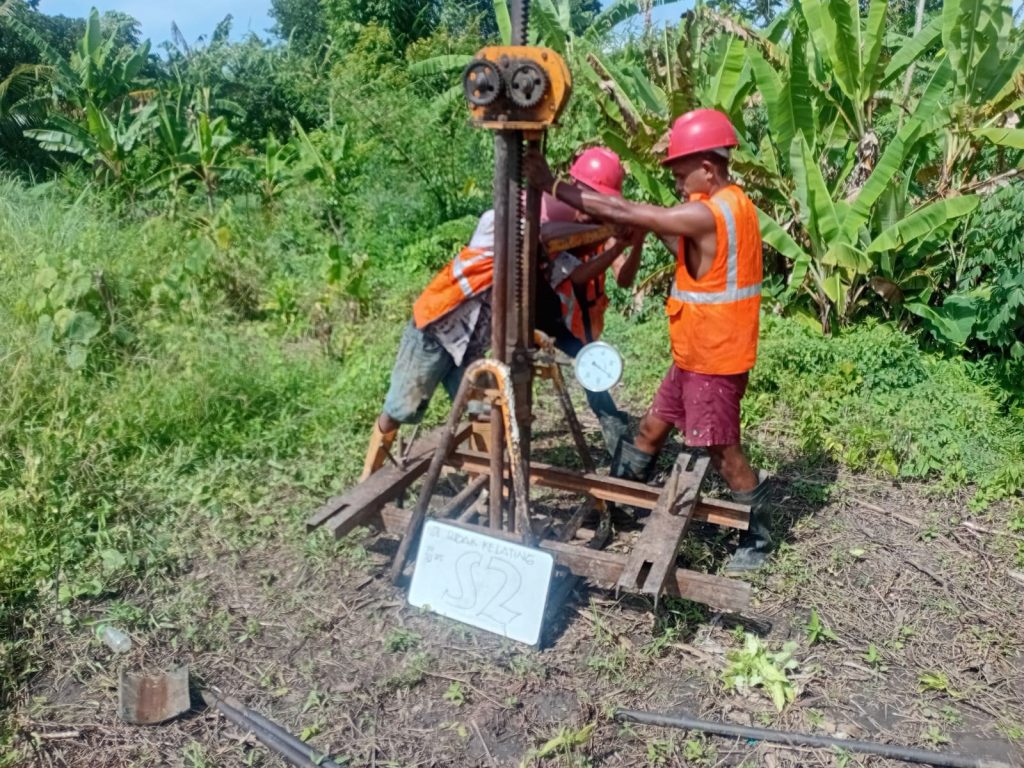
There is no reasonable scenario in which skipping a soil test produces a better outcome than conducting one. The process is fast, the cost is accessible, and the data it produces is irreplaceable. In the soil test vs no soil test evaluation, the answer from any qualified geotechnical professional will always point in the same direction.
Indo Soil has completed over 100 projects across Bali, Lombok, NTB, and NTT, surveying more than 3,000 hectares of land for developers, architects, and private property owners. Our team delivers CPT, boring test, topographic survey, geoelectric, GPR, and slope stability analysis, all supported by engineer-certified reports. Consult your needs with Indo Soil today for a free, no-commitment consultation.
Professional Soil Test Services in Bali by Indo Soil
What Is a Soil Test in Bali?
Get Your Free Consultation Today
Tell us about your land and we will recommend the most appropriate soil test method. No commitment required. Indo Soil serves Bali, Lombok, NTB, and NTT.
Conclusion
The soil test vs no soil test comparison yields a clear result. Testing provides verified data, permit-ready documentation, and a foundation for safe structural design. Skipping it introduces foundation failure risk, permit delays, and potential costs that far exceed the test investment. The data speaks clearly: a soil test is always the better option.
Indo Soil is ready to help you build safely on any terrain in Bali, Lombok, NTB, and NTT. Whether you are planning a private villa, a commercial development, or a coastal resort, the right geotechnical data is the first step. Contact Indo Soil today for a free consultation and let us determine the best soil test solution for your land.
How to Determine Optimal CPT Test Point Spacing in Bali
Electromechanical vs Mechanical Sondir CPT in Bali
Soil Test for North Bali Property Investment 2026
Frequently Asked Questions
Q1: How much does a soil test cost compared to a foundation repair in Bali?
A standard CPT/Sondir soil test from Indo Soil starts at IDR 4,000,000 for a basic three-point investigation. Foundation repair after construction failure, by contrast, typically costs hundreds of millions of rupiah and involves structural intervention, material costs, and potential legal liability. The upfront cost of a soil test is a fraction of any post-construction repair scenario.
Q2: Is a soil test legally required before building in Bali?
Yes. For obtaining building permits including PBG and SLF, geotechnical data is required as part of the technical documentation submitted to local authorities. A certified soil test report from a professional firm such as Indo Soil supports this requirement and is necessary for permit approval.
Q3: What happens if I build without a soil test and the ground fails?
Without a soil test, you risk choosing an incorrect foundation type, which can lead to settlement, structural cracking, and partial building collapse. Corrective works are significantly more expensive than pre-construction investigation. Additionally, without geotechnical documentation, proving compliance to insurers or authorities becomes very difficult. Read about the 10 fatal mistakes that happen without soil testing.
Q4: What is the difference between CPT and a boring test (SPT)?
A CPT continuously pushes a cone into the ground and records resistance at every depth without taking soil samples. This produces a detailed soil profile quickly and is ideal for soft ground assessment. A boring test (SPT) drills a borehole and extracts physical soil samples at intervals for laboratory analysis, providing deeper investigation data. Learn more about CPT in Bali.
Q5: How long does it take to get a soil test report from Indo Soil?
A standard CPT or Sondir test at three points can typically be completed in one working day on site. Indo Soil delivers the certified geotechnical report in both English and Bahasa Indonesia within five to seven working days from the date of testing. The report is provided in PDF and CAD formats and is structured to support permit applications directly.
