





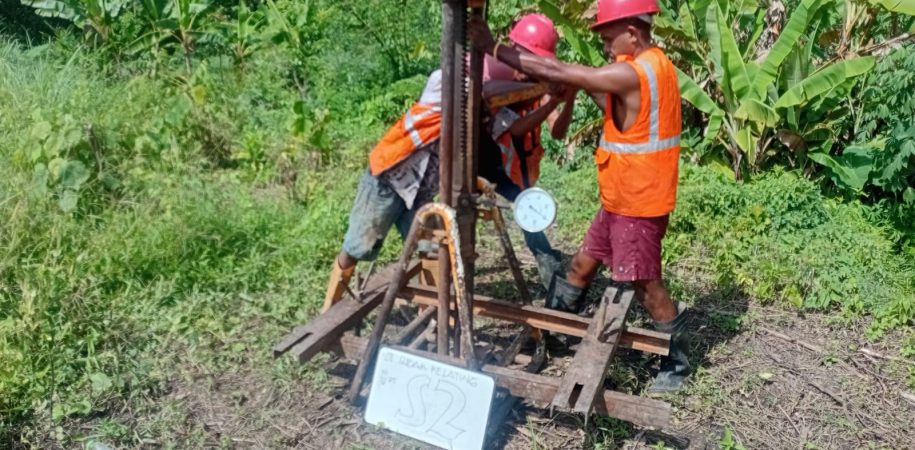

Before starting any construction project in Bali, NTB, or NTT, many landowners and developers skip a step that could save them thousands of dollars later. A soil test is that step. Without knowing the actual condition of the ground beneath your feet, you are essentially designing a building on assumptions. And in a region where volcanic soils, coastal sediments, and steep terrain create highly variable ground conditions, those assumptions can be very costly.
This guide explains what a soil test is, why it is essential, how the process works, and what your report will tell you. Whether you are building a private villa, a boutique resort, or a commercial property, understanding what is a soil test is the first intelligent step toward a safe and compliant structure.
What Is a Soil Test?
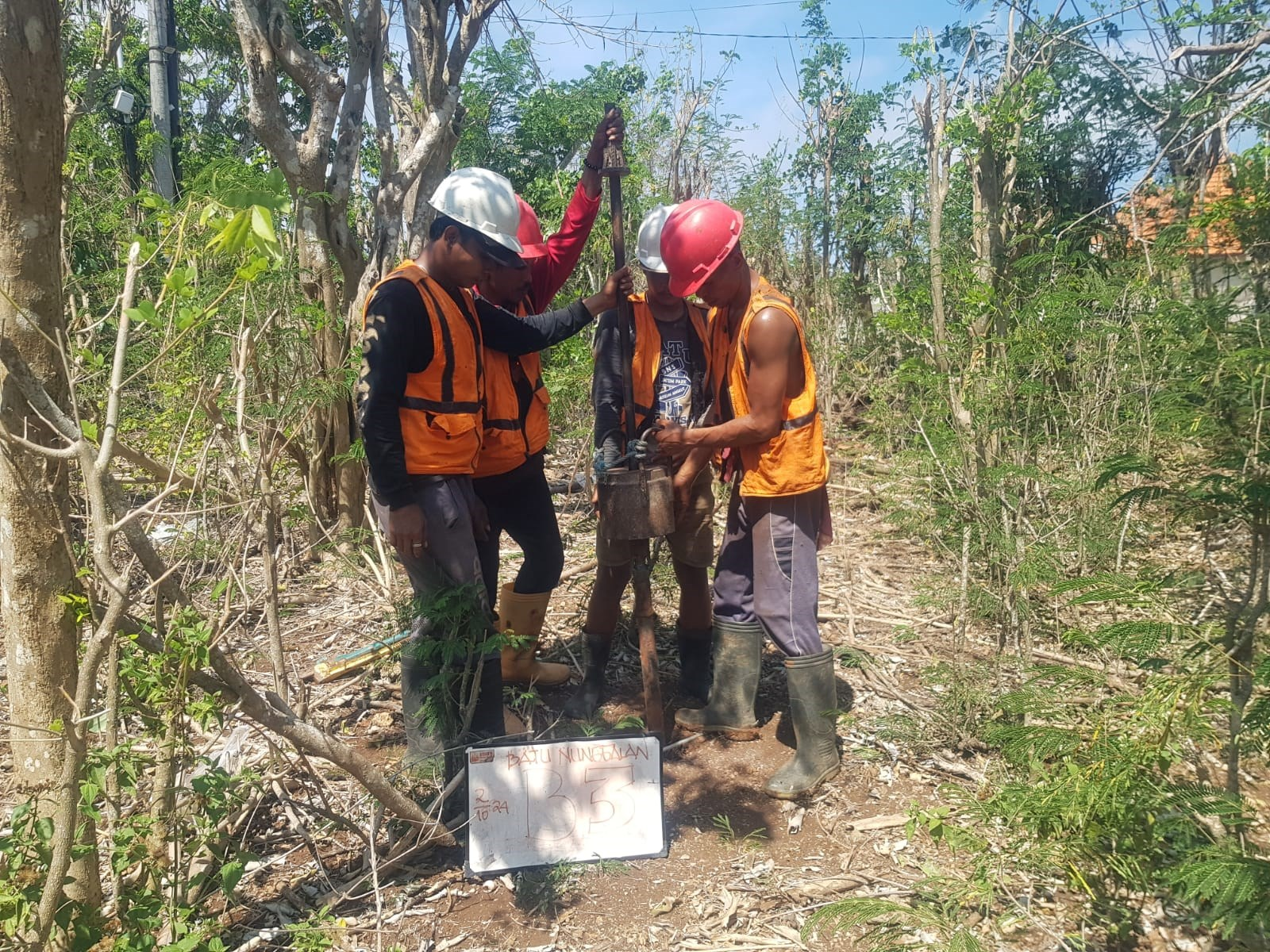
A soil test is a systematic series of field and laboratory procedures designed to determine the physical characteristics, load-bearing capacity, and composition of the soil layers at your construction site. According to ASTM D3441, the internationally recognised standard for cone penetration testing, the primary objective of these field tests is to provide a detailed record of cone resistance useful for evaluating site stratigraphy and depth to firm layers.
In simpler terms, a soil test answers three core questions: What type of soil is beneath your land? How deep does stable ground begin? And how much load can that ground safely carry? These answers directly determine what type of foundation your structure requires.
Why Is a Soil Test Important?
Unstable soil is one of the leading causes of structural failure in construction. Foundation settlement, wall cracking, and in severe cases building collapse are all consequences that can be traced back to inadequate ground investigation. The US Federal Highway Administration’s Geotechnical Engineering Circular No. 5 emphasises that accurate evaluation of soil and rock properties is fundamental to safe and cost-effective design and construction.
In Bali, the situation demands even more attention. The island sits within one of the world’s most seismically active zones. Indonesia’s Meteorological, Climatological, and Geophysical Agency (BMKG) maintains active earthquake monitoring across the archipelago, and Bali sits squarely within a zone requiring careful assessment of ground acceleration and soil stability. Without a soil test, you cannot know whether your site is vulnerable to settlement, liquefaction, or slope movement.
Furthermore, a certified geotechnical report is increasingly required for SLF (Sertifikat Laik Fungsi) and PBG (Persetujuan Bangunan Gedung) permit submissions. Skipping this step means skipping your permits.
Types of Soil Test Methods
There are several accepted methods for conducting a what is a soil test investigation, each suited to different site conditions and project requirements. The three most common methods used in Indonesia are outlined below.
| Test Method | Standard Reference | Primary Use | Depth Range |
|---|---|---|---|
| CPT / Sondir (Cone Penetration Test) | ASTM D5778 | Shallow profile, soil stratification, bearing capacity | 0 to 20 m |
| SPT Boring (Standard Penetration Test) | ASTM D1586 | Deep profile, soil sampling, structural foundation design | 5 to 30+ m |
| Laboratory Soil Analysis | Eurocode 7 / EN 1997 | Physical and mechanical soil properties | From collected samples |
The CPT or Sondir method pushes a standardised cone into the ground at a steady rate and measures resistance at each depth interval. As noted by the ISSMGE Technical Committee TC102 on In-Situ Testing, CPT has become one of the most widely used tools worldwide for rapid, continuous subsurface profiling. The SPT Boring method drills a borehole and collects physical samples at intervals, which can then be sent to a laboratory for further classification and strength analysis.
The Soil Test Process from Start to Report
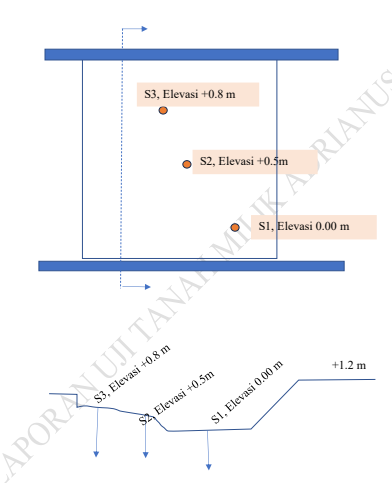
Understanding the full process helps you plan your project timeline accurately. A professional soil test follows a structured sequence that begins before any equipment arrives on site and ends with a certified technical report you can use for permit applications and structural design.
| Stage | Activity | Output |
|---|---|---|
| 1. Site Survey | Initial review of land size, topography, and project scope | Test point layout plan |
| 2. Test Point Determination | Positioning CPT or SPT locations based on site plan | Confirmed field programme |
| 3. Field Testing | Sondir / CPT or SPT boring conducted on site | Raw field data and logs |
| 4. Sample Collection | Undisturbed or disturbed soil samples retrieved for lab analysis | Labelled soil samples |
| 5. Data Interpretation | Processing results, classifying soil layers, calculating bearing capacity | Interpreted geotechnical data |
| 6. Report Preparation | Certified technical report compiled in English and Indonesian | PDF report ready within 5 to 7 working days |
The European standard Eurocode 7 (EN 1997) establishes that a Ground Investigation Report should present all data and information gathered during the investigation, together with a factual account of the methods and equipment used. Indo Soil’s reports follow this internationally accepted structure, making them readily usable by foreign architects and structural engineers working on projects in Bali.
Need a soil test report fast? Indo Soil delivers certified results in just 5 to 7 working days.
Who Needs a Soil Test?
A soil test is not exclusive to large-scale developers. In fact, individual landowners and small project teams arguably benefit the most from having accurate geotechnical data, because they typically have less financial buffer to absorb unexpected foundation problems mid-construction.
The following groups all stand to benefit directly from a professional soil test before construction begins in Bali, NTB, or NTT:
Villa developers and private landowners planning residential builds on plots where soil conditions are unknown. Architects and structural engineers who need accurate bearing capacity values to complete foundation designs. Contractors and builders who want to avoid disputes arising from undiscovered soil problems once excavation has begun. Property investors purchasing land and wanting to verify that the ground supports their intended development. Government and institutional bodies commissioning public infrastructure, schools, or health facilities.
As highlighted by the ISSMGE’s international webinar on CPT, cone penetration testing is particularly valuable in tropical and coastal environments where soft or loose soils can vary dramatically over short distances. This is precisely the reality across many areas of Bali, especially in coastal strips like Canggu, Seminyak, Kerobokan, and the cliff zones of Uluwatu and Pecatu.
What Do You Get from a Soil Test Report?
A professionally prepared soil test report provides far more than a single number. It is a comprehensive geotechnical document that your entire design and construction team will reference throughout the project. According to the FHWA Geotechnical Engineering Circular No. 5, a thorough ground investigation report should enable the engineer to evaluate the engineering properties of soil, identify potential geotechnical hazards, and select an appropriate foundation system.
Your Indo Soil report will include the following key elements: Soil layer profiles showing the type and thickness of each soil stratum from surface to test depth. Bearing capacity values expressed in kPa or tonnes per square metre, indicating how much load the soil can safely carry. Foundation type recommendations specifying whether shallow footings, pile foundations, or raft foundations are appropriate. Safe foundation depth identifying the precise depth at which firm, load-bearing ground begins. Groundwater level data, which affects both foundation design and excavation planning. Liquefaction risk assessment where relevant, particularly for coastal and low-lying sites.
This data directly serves architects, structural engineers, and permit authorities. Reports are provided in both English and Indonesian, making them suitable for SLF and PBG permit submissions as well as for international design teams.
Soil Test Service Packages and Pricing
Indo Soil offers transparent, fixed-price packages designed to match different project types and budgets. There are no hidden charges, and all packages are handled by experienced professionals with a minimum of 10 years in geotechnical investigation.
| Package | Price (IDR) | Inclusions | Ideal For |
|---|---|---|---|
| Basic Soil Test | Rp 4,000,000 | 3 CPT test points (0 to 5 m), site visit, PDF report in English and Indonesian, initial foundation recommendation | Small villas, early-stage feasibility |
| Business Starter | Rp 7,500,000 | Topographic survey with contour lines, 3 soil test points (0 to 5 m), full technical report in English and Indonesian, PDF and CAD (DWG) output | Mid-size residential or boutique commercial |
| Topographic Survey | Rp 4,500,000 | Elevation survey using GPS / Total Station, DWG and PDF output, spot levels and benchmark points, suitable for cut-and-fill and drainage design | Land planning, drainage design, site layout |
All packages come with a standard delivery time of 5 to 7 working days. For larger sites or projects requiring SPT boring at greater depths, Indo Soil provides custom quotations based on the number of test points and required depth. Contact the team directly for a project-specific estimate.
Indo Soil: Professional Soil Test Solutions in Bali
Indo Soil is a specialised geotechnical investigation company based in Bali, with over 10 years of active field experience and more than 100 completed projects across Bali, NTB, and NTT. The team provides soil testing, topographic surveys, and geophysical investigations for residential, hospitality, commercial, and public infrastructure projects.
Every investigation is conducted using calibrated equipment aligned with recognised international standards including ASTM D3441 and ASTM D5778. Reports follow a structured format consistent with the reporting principles outlined in Eurocode 7 and Indonesian National Standard SNI 2827:2008. This dual compliance ensures your report is accepted by both local permitting authorities and international engineering consultants.
Indo Soil has served clients including villa developers, architects, contractors, resort operators, government agencies, and property investors. The company operates across all major districts in Bali including Badung, Denpasar, Gianyar, Tabanan, Buleleng, and Karangasem, as well as the islands of Lombok and Sumbawa.
Ready to get started? Speak with Indo Soil’s geotechnical team today and receive a free consultation for your project.
Conclusion
A soil test is not a bureaucratic formality. It is an investment in the structural integrity and long-term safety of everything you build. In a geologically dynamic environment like Bali, where soil types shift from volcanic clay to coastal sand within a few hundred metres, the only responsible foundation for any structure is accurate subsurface data.
Understanding what is a soil test gives you the confidence to design correctly, build safely, and obtain your permits without delays. Indo Soil is here to provide that data, quickly and professionally, so your project can move forward on solid ground.
Contact Indo Soil today: +62 851 3514 2186 | admin@soiltestbali.com
Frequently Asked Questions
1. What is a soil test and is it mandatory in Bali?
A soil test is a geotechnical investigation to determine soil characteristics, bearing capacity, and foundation suitability at your construction site. While not always legally mandated for every small structure, a certified soil test report is increasingly required for SLF and PBG permit submissions for residential and commercial buildings in Bali and across Indonesia.
2. How long does a soil test take in Bali?
The field testing itself typically takes one to two days depending on the number of test points and depth required. Indo Soil delivers the complete certified technical report within 5 to 7 working days from the date of field investigation.
3. What is the difference between a CPT / Sondir and an SPT Boring test?
A CPT or Sondir test pushes a standard cone into the ground continuously to measure resistance at every depth interval, providing a fast and detailed soil profile. An SPT Boring test drills a borehole and drives a split-barrel sampler at intervals, retrieving physical soil samples for laboratory analysis. Both methods serve different purposes and are often used together for a complete investigation.
4. How many soil test points does my land need?
The number of test points depends on your land size and the variability of the soil. A typical small villa plot of 5 to 10 are requires a minimum of 3 test points. Larger or more complex sites may require more, particularly if the terrain includes slopes, proximity to water, or significant elevation changes. Indo Soil’s team will recommend the appropriate programme after an initial site review.
5. Can a soil test report from Indo Soil be used by foreign engineers and architects?
Yes. Indo Soil’s reports are prepared in both English and Indonesian and follow an internationally consistent structure aligned with standards including ASTM and Eurocode 7. This makes them directly usable by foreign design consultants, international engineering firms, and international banks or investors requiring due diligence documentation.
