





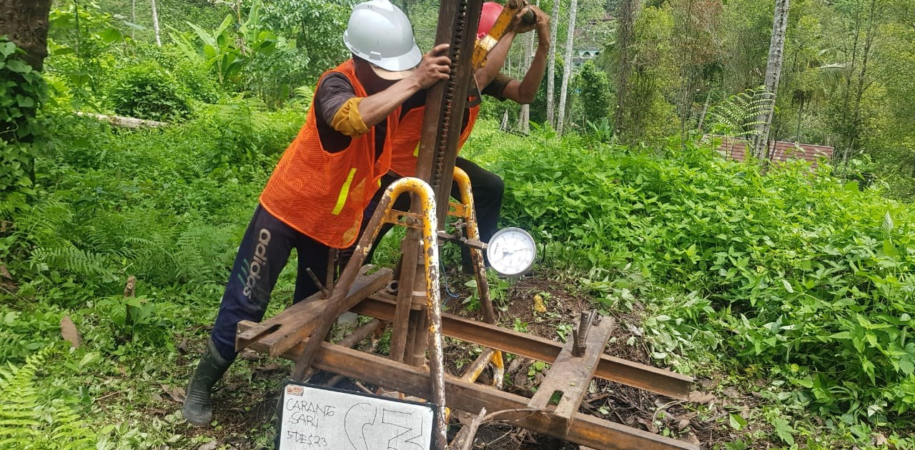

Some knowledge never goes out of date, and understanding how to choose the right Soil Test Bali service is certainly one of them. Whether you are a landowner, property developer, architect, or foreign investor building in Bali, this guide gives you the practical grounding you need before a single pile is driven into the ground.
Every construction project in Bali, NTB, and NTT rests on one non-negotiable foundation: knowing what lies beneath the surface. Skipping geotechnical investigation is one of the costliest decisions any developer can make. Indo Soil has supported more than 100 projects across the region with certified reports delivered in 5 to 7 working days.
Why Soil Testing Matters for Every Construction Project in Bali
Bali attracts billions in property investment each year, yet a significant number of construction failures trace back to one overlooked step: proper soil test Bali investigation. According to the International Society for Soil Mechanics and Geotechnical Engineering (ISSMGE), inadequate site characterisation remains a leading cause of avoidable structural failures worldwide.
Therefore, before any foundation design can begin, you need verified data on bearing capacity, soil layers, and groundwater depth. Without this data, your structural engineer is essentially working blind, and that carries serious financial and safety risks for your project.
Read Also
What Is Soil Testing? A Clear Introduction for Property Owners
10 Fatal Mistakes That Happen When You Skip Soil Testing
Understanding Bali’s Unique Soil Conditions Before You Test
Not all soils are equal, and Bali’s geological diversity makes this point especially clear. The island presents at least four distinct soil environments: limestone formations in Kuta Selatan and Uluwatu, coastal soft clay in the northern shore areas, volcanic deposits across the central highlands, and sandy alluvial soil in Canggu and Seminyak.
Consequently, a one-size-fits-all approach to foundation design simply does not work here. The ASTM International standards for geotechnical testing clearly specify that site-specific conditions must guide every investigation programme. Choosing a soil test Bali provider who understands local geology is therefore as important as the test itself.
| Bali Region | Dominant Soil Type | Key Concern | Recommended Test |
|---|---|---|---|
| Uluwatu / Kuta Selatan | Limestone / Karstic rock | Cavity risk, irregular bearing | CPT + Boring SPT |
| Canggu / Seminyak | Sandy alluvial | Liquefaction, settlement | CPT Sondir |
| North Bali (coastal) | Soft marine clay | Low bearing capacity | Boring SPT + lab analysis |
| Central / Highland Bali | Volcanic ash and tuff | Variable compaction, slope stability | Boring SPT + slope analysis |
| Lombok (NTB) | Volcanic and residual soil | High plasticity, shrink-swell | CPT + lab index tests |
Read Also
Ultimate Bali Soil Testing Guide for Coastal and Cliff Construction Projects
Soil Strength and Types of Soil in Lombok
The Key Standards and Regulations That Govern Soil Test Bali Work
Any legitimate soil test Bali provider must operate under recognised Indonesian and international standards. The primary national references include SNI 2827 for cone penetration testing (CPT/Sondir) and SNI 4153 for standard penetration testing (SPT), both published by the Badan Standardisasi Nasional.
Furthermore, Eurocode 7 provides internationally accepted guidance on ground investigation planning and result interpretation. Reviewing Eurocode 7 from the European Commission Joint Research Centre gives you a useful benchmark for what a complete geotechnical report should contain. Reports from Indo Soil align with both SNI requirements and internationally recognised reporting practices, making them valid for SLF and PBG permit applications.
Need a certified soil test report fast? Indo Soil delivers in 5 to 7 working days, covering Bali, NTB, and NTT. Chat with us on WhatsApp now.
How to Evaluate a Soil Test Bali Provider: 5 Criteria You Cannot Ignore
Choosing the right geotechnical partner goes far beyond comparing prices. When you evaluate any soil test Bali service, apply these five criteria to ensure you receive a report that is technically sound and professionally credible.
1. Equipment and testing method. A qualified provider should offer both CPT (Cone Penetration Test) and Boring SPT as standard options, with calibrated equipment and the ability to reach depths beyond 20 metres when required. According to ISSMGE technical committee guidelines, test method selection must match site conditions and structural requirements.
2. Report format and language. For international clients and foreign investors in Bali’s property market, reports in both English and Bahasa Indonesia are essential. Indo Soil provides full reports in both languages with PDF and CAD (DWG) output formats.
3. Turnaround time. Delayed reports hold up permit applications and push back construction schedules. A professional firm commits to clear delivery timelines. Indo Soil’s standard is 5 to 7 working days.
4. Local experience and project portfolio. Regional knowledge of Bali’s soil conditions, regulatory requirements, and site access challenges comes only from hands-on local experience. Always verify your provider’s completed project history before engaging them.
5. Certification and institutional acceptance. Confirm that the provider’s reports are accepted by financial institutions, government bodies, and insurance underwriters. Indo Soil’s certified reports meet these requirements across Bali, NTB, and NTT.
Read Also
Why Professional Soil Testing in Bali Makes the Difference
How Soil Testing Protects Your Bali Property Investment
What Every Bali Property Investor Must Know About Soil Conditions
Indo Soil Service Packages and Pricing Guide
Transparent pricing is an important indicator of a trustworthy soil test Bali provider. Indo Soil publishes its package pricing openly, with no hidden charges. All packages include certified reports and are handled by experienced professionals.
| Package | Starting Price | Key Inclusions | Best For |
|---|---|---|---|
| Basic Soil Test | Rp 4,000,000 | 3 test points (0–5 m), CPT sondir, PDF report in English and Bahasa Indonesia | Small villas, early-stage planning |
| Business Starter | Rp 7,500,000 | Topographic survey + 3-point soil test, PDF and CAD (DWG) report | Efficient combined investigation |
| Topographic Survey | Rp 4,500,000 | GPS/Total Station survey, contour output DWG and PDF, benchmark points | Site layout, drainage, cut-and-fill design |
| Boring SPT (Deep Investigation) | Custom quote | 5–20+ m borehole, SPT, soil sampling, lab analysis, foundation recommendation | Multi-storey villas, resorts, commercial buildings |
All packages are delivered within 5 to 7 working days. For project-specific pricing, contact Indo Soil directly at soiltestbali.com/contact.
Common Soil Test Bali Mistakes That Can Cost You Dearly
Even experienced developers in Bali sometimes make critical errors during the geotechnical investigation phase. Recognising these mistakes in advance saves you from expensive remedial work down the line.
Testing too few points. A single CPT point tells you nothing about the variability across your site. Industry guidance from the ISSMGE recommends a minimum spacing plan based on site area and structural load. Indo Soil’s guide on optimal CPT point spacing for Bali explains this clearly.
Relying on neighbouring site data. Soil conditions can change dramatically within 20 metres in Bali, particularly in karstic limestone zones and volcanic transition areas. You should always commission your own independent investigation for every plot.
Choosing the cheapest provider. A low-cost report that lacks calibration records, laboratory data, or proper stratigraphy logs will not be accepted by structural engineers or permit authorities. This forces you to repeat the entire investigation, costing far more than the original saving.
Skipping laboratory testing for deep projects. Surface CPT data alone is insufficient for structures taller than two storeys. Laboratory tests on soil samples are essential for accurate bearing capacity and settlement calculations, as outlined in ASTM geotechnical testing standards.
Read Also
How to Avoid Contractor Disputes Caused by Soil Issues in Bali
How Well Do Soil Test Bali Recommendations Match Field Conditions?
Electromechanical vs Mechanical Sondir CPT: Which Is Right for Your Project?
Soil Test Bali for Specific Project Types: What You Need to Know
Different construction types demand different investigation programmes, and a professional soil test Bali provider will tailor their approach accordingly. Here is what each major project type typically requires.
Luxury cliff villas (Uluwatu, Pecatu, Nusa Dua). These sites sit on karstic limestone, which creates cavity and dissolution risks beneath the surface. A proper investigation requires both CPT and deep boring, plus slope stability analysis. See how Indo Soil approached a geotechnical analysis for luxury cliff villas as a practical case reference.
Eco-resorts and boutique hotels (Canggu, Seminyak, Berawa). Sandy and alluvial soils in these popular hospitality corridors require careful assessment of settlement potential. CPT sondir with bearing capacity interpretation is the most efficient approach for these sites.
Residential developments (Denpasar, Badung). Standard CPT and SPT investigations cover most residential applications in Bali’s urban zones. Indo Soil regularly serves projects in Denpasar and Badung with fast turnaround.
North Bali investment properties. This emerging corridor presents unique soft soil challenges that require careful assessment. Learn more in Indo Soil’s dedicated article on soil testing for North Bali property investment in 2026.
Read Also
Case Study: Soil Test Investigation in Pecatu, South Kuta Bali
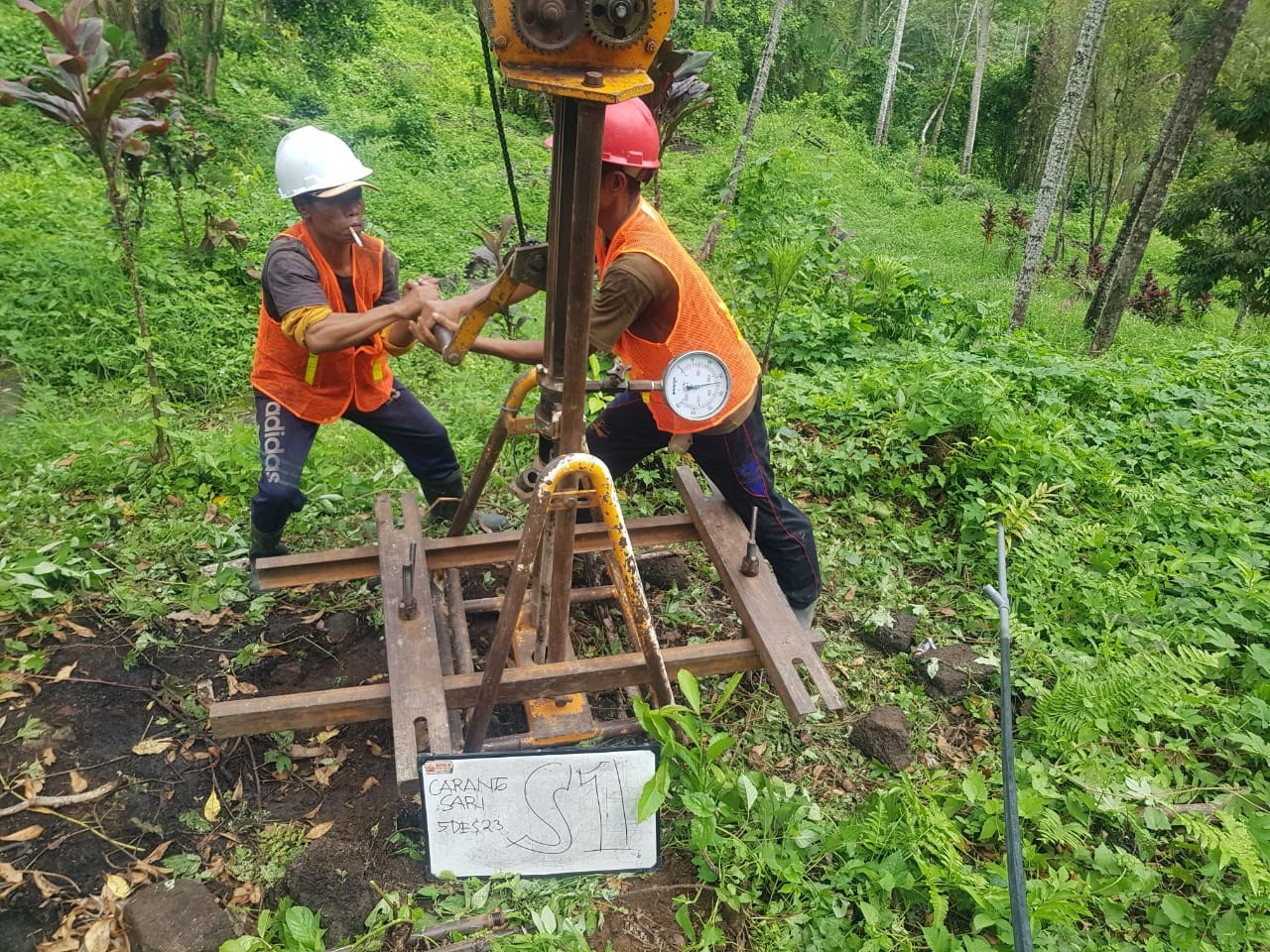
Soil Test and Slope Analysis in Carang Sari, Petang Bali
Soil Test for a Residential Project in Canggu
Why Indo Soil Is Bali’s Trusted Geotechnical Partner
Over ten years of operation in Bali, NTB, and NTT, Indo Soil has built a reputation grounded in technical accuracy, responsive service, and transparent communication. The team has completed more than 100 projects, tested over 500 boreholes and soil samples, and surveyed more than 3,000 hectares of land across the region.
In addition, every Indo Soil report is delivered in English and Bahasa Indonesia, formatted for direct submission to permit authorities, structural engineers, banks, and insurance underwriters. The standard turnaround of 5 to 7 working days means your project timeline stays on track. Whether you need a professional sondir CPT in Bali, a complete boring SPT investigation, or a combined geotechnical and topographic survey, Indo Soil delivers the precision your project demands.
Read Also
Professional Soil Test Bali: Sampling Procedures Explained
Boring Test Guide: Procedures and Foundation Interpretation
Indo Soil: Professional Soil Test Services in Bali
Conclusion
Choosing the right soil test Bali service is not simply a technical formality. It is a strategic decision that protects your investment, accelerates your permit approvals, and ensures your structure performs safely for decades. The tips covered in this article give you a clear framework: understand your site’s soil type, verify the provider’s standards compliance, review their project portfolio, and insist on certified reports in both languages.
Therefore, when you are ready to take the next step, make Indo Soil your first call. With certified reports, modern equipment, experienced professionals, and full coverage across Bali, NTB, and NTT, you gain a geotechnical partner who is committed to your project’s success from the very first test point. Get in touch with the Indo Soil team today at soiltestbali.com/contact and receive your customised project quote.
Frequently Asked Questions About Soil Test Bali
1. How many soil test points do I need for my Bali villa plot?
For a standard villa plot, a minimum of three CPT (sondir) points is recommended to capture soil variability across the site. Larger plots, irregular terrain, or cliff-side locations typically require additional points. Indo Soil’s team assesses your site and recommends the appropriate testing programme before work begins.
2. What is the difference between CPT sondir and boring SPT for soil test Bali?
CPT (Cone Penetration Test) is faster and provides continuous soil profiling from the surface to refusal depth, typically 5 to 15 metres. Boring SPT (Standard Penetration Test) involves drilling a borehole and allows soil sampling for laboratory analysis, making it essential for deeper investigations and multi-storey structures. Many projects in Bali benefit from using both methods in combination.
3. Will a soil test Bali report be accepted for my SLF or PBG permit application?
Yes, provided the report is prepared by a qualified geotechnical provider following SNI standards and includes all required data such as soil profiles, bearing capacity calculations, and foundation recommendations. Indo Soil’s certified reports are structured specifically to meet SLF and PBG submission requirements across Bali and the surrounding regions.
4. How long does a soil test Bali investigation take?
Fieldwork for a standard 3-point CPT investigation typically takes one day on site. The full certified report, including data processing, interpretation, and formatting in English and Bahasa Indonesia, is delivered within 5 to 7 working days of fieldwork completion.
5. Can a foreign property investor or architect order a soil test Bali directly?
Absolutely. Indo Soil regularly works with foreign investors, international architects, and overseas developers active in Bali’s property market. All reports are provided in English, and the team communicates effectively with international clients throughout the entire process. You can initiate an enquiry directly via WhatsApp or the contact form at soiltestbali.com/contact.
