







Knowing the correct steps before starting a construction project is essential for long-term structural safety and financial stability. One of the most common mistakes made by property owners and developers is overlooking early soil investigation.
Understanding how to avoid contractor disputes caused by soil issues begins with a proper soil testing guide Bali process.
This guide is designed to help investors, developers, and landowners understand the essential steps of soil testing in Bali so that construction decisions are based on reliable geotechnical data rather than assumptions.
Why Soil Testing Is Critical Before Any Construction Project in Bali
Many construction projects in Bali experience delays, budget overruns, and contractor disputes not because of poor architectural design, but because soil conditions were never properly investigated.
A professional soil test Bali investigation acts as a preventive step that protects your investment from hidden geological risks below the surface.
Key technical decisions depend directly on accurate soil data, including:
- Foundation design selection
- Excavation depth
- Structural load capacity
- Groundwater management
- Slope stability requirements
According to the FHWA Geotechnical Engineering Circular No. 5, accurate soil evaluation is one of the most important factors affecting structural safety and long-term building performance.
The professional team at Indo Soil ensures your project stands on the right foundation, both literally and technically.
Geological Conditions That Every Soil Testing Guide Bali Must Consider
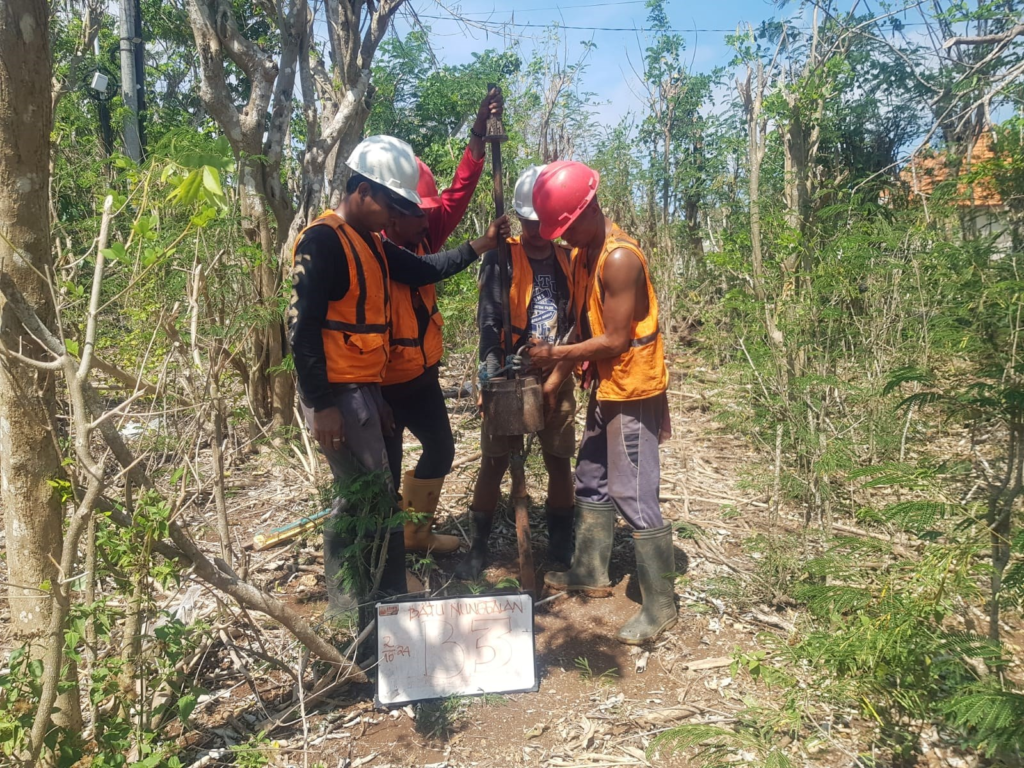
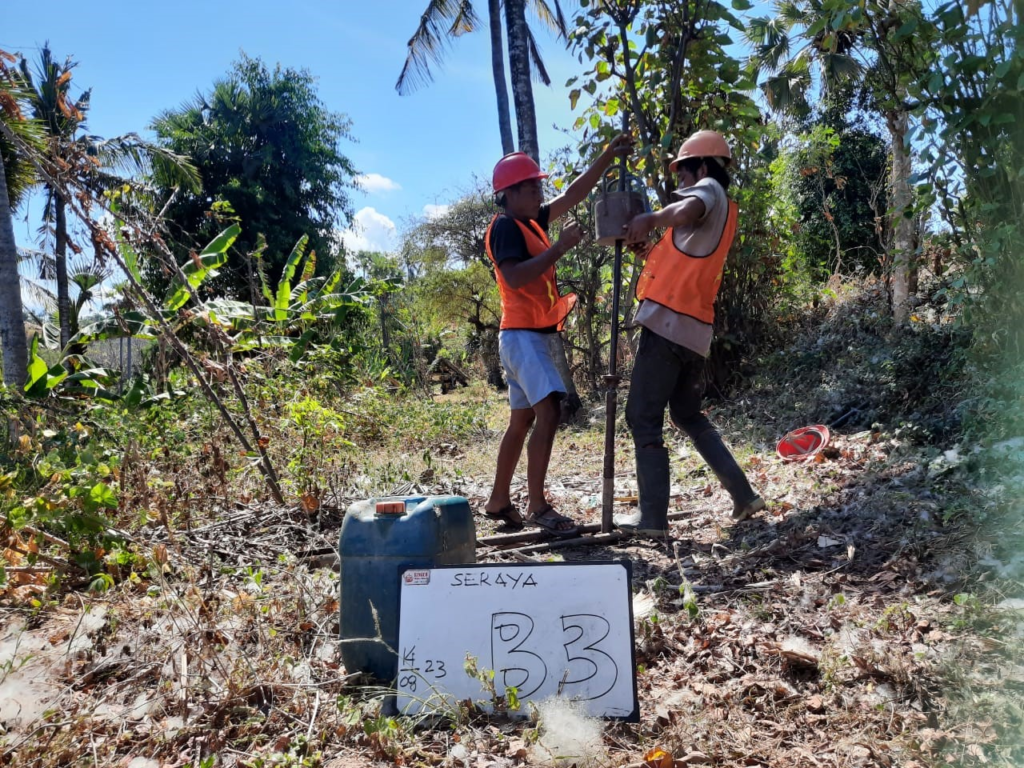
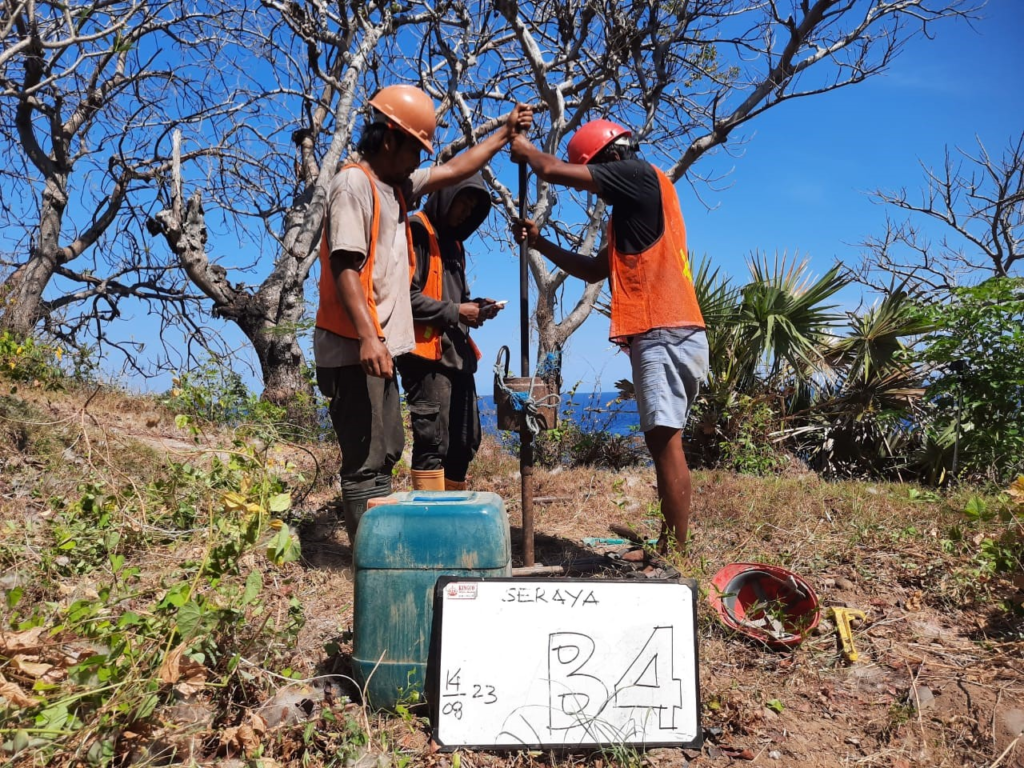
Each region across Bali, Lombok, and Nusa Tenggara has unique geological characteristics that significantly influence construction planning.
Common soil conditions in Bali include:
Limestone formations
Common in South Kuta and Uluwatu, requiring careful foundation anchoring.
Soft coastal clay soils
Often found along northern Bali, with higher settlement risks.
Volcanic soil formations
Common in Lombok and parts of Bali, which require specialized geotechnical analysis.
According to the USGS National Geologic Map Database, regional geology directly affects:
- Soil bearing capacity
- Settlement behavior
- Liquefaction risk
- Slope stability
Because of these variations, a generic approach to soil investigation is never sufficient. Every construction site requires site-specific geotechnical investigation data.
Indonesian Standards for Soil Testing and Geotechnical Investigation
All soil investigations conducted in Indonesia must comply with national and international technical standards.
Important standards include:
- SNI 2827:2008 – CPT / Sondir testing
- SNI 4153:2008 – SPT boring investigation
- ASTM D3441 – Mechanical cone penetration testing
- ISO 22476-1 – Electronic cone and piezocone penetration testing
Compliance with these standards ensures that geotechnical reports are legally valid for:
- Building permits (PBG)
- Building function certificates (SLF)
- Engineering design approval
- Insurance documentation
Failure to follow these standards may result in permit rejection and increases the risk of disputes between developers and contractors.
How Indo Soil Provides Reliable Soil Testing in Bali
Indo Soil is a Bali-based geotechnical investigation company providing soil testing services across:
- Bali
- NTB (Nusa Tenggara Barat)
- NTT (Nusa Tenggara Timur)
With more than 10 years of experience and over 100 completed projects, Indo Soil delivers reliable soil investigation reports supported by modern testing equipment.
Services include:
- CPT / Sondir testing
- SPT boring investigation
- Soil laboratory analysis
- Slope stability studies
- Geotechnical engineering reports
Reports are available in Indonesian and English, delivered in PDF and DWG formats, with an average turnaround time of 5–7 business days.
According to Eurocode 7 (EN 1997-1), geotechnical design must always be based on site-specific investigation data rather than contractor assumptions.
4 Critical Soil Investigation Details Many Investors Overlook
Even when soil testing is performed, several important technical factors are often missed during early project planning.
1. Settlement Analysis
Many projects skip detailed settlement analysis. Even if soil bearing capacity appears sufficient, differential settlement can lead to structural cracking and misalignment.
The British Standard BS 1377:1990 emphasizes the importance of laboratory soil compressibility testing for structures built on variable terrain.
2. Groundwater Level Investigation
Groundwater depth significantly affects:
- Excavation costs
- Dewatering requirements
- Foundation waterproofing systems
If groundwater data is not included in early contracts, contractors often submit costly change orders during construction.
3. Slope Stability Analysis
Projects located on hillside land in areas such as:
- Petang
- Uluwatu
- Karangasem
require combined geotechnical analysis.
CPT data alone is not sufficient. Proper slope analysis typically requires:
- SPT boring investigation
- Topographic survey
- Stability modeling
4. Certified Geotechnical Reports
Some investors accept verbal recommendations from contractors rather than requesting a certified geotechnical report.
According to ISSMGE CPT standards, only standardized and documented soil investigation results are considered technically defensible for resolving engineering disputes.
Real Case Studies: Soil Testing That Prevented Construction Disputes
Completed Indo Soil projects across Bali consistently show that developers who perform a comprehensive soil testing guide Bali investigation before construction experience significantly fewer project disputes.
Projects conducted in areas such as:
- Seminyak
- Canggu
- Berawa
- Pecatu
- Carang Sari
demonstrate that early geotechnical investigation prevents:
- mid-construction change orders
- structural design revisions
- foundation failure risks
- contractor scope disputes
Verified soil data before construction begins remains the most effective strategy to protect project budgets and timelines.
Conclusion
Understanding and applying the correct soil testing guide Bali process is essential for preventing contractor disputes and ensuring long-term structural safety.
Early geotechnical investigation allows developers to make informed technical decisions before construction begins.
Compared to the cost of repairing structural problems caused by inaccurate soil data, professional soil testing is a small but critical investment.
For reliable geotechnical investigation services in Bali, Indo Soil provides certified soil testing reports delivered within 5 to 7 business days, helping developers build with confidence and technical certainty.
