





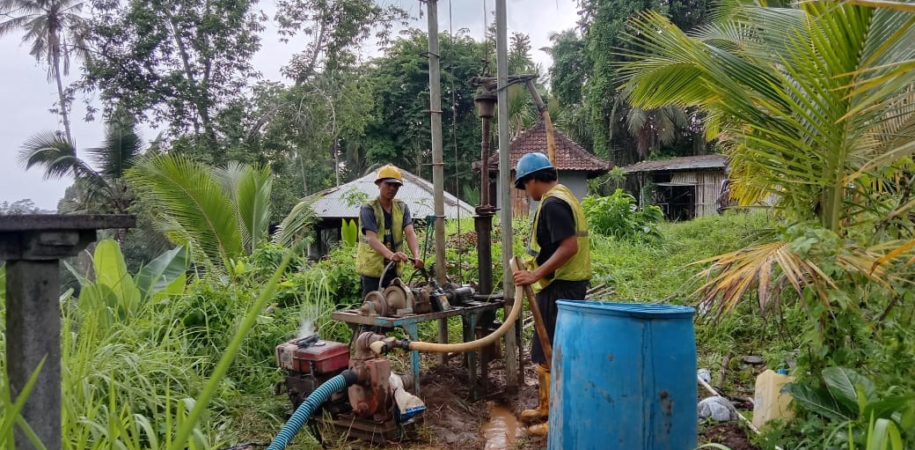

Before any foundation goes into the ground, one question consistently surfaces among developers, architects, and landowners across Bali: what does soil testing actually cost, and what drives that figure? Understanding soil testing cost Bali is not simply about budgeting. It is about knowing exactly what you are paying for and why it matters for every layer of your project.
This article breaks down every factor that shapes pricing, guides you through the most common test types, and helps you make a confident decision before your next development in Bali, Lombok, or the wider Nusa Tenggara region.
Read Also: What Is Soil Testing? A Complete Beginner’s Guide for Bali Property Owners
Why Soil Testing Cost Bali Matters Before You Build

Every plot of land in Bali carries a unique geological profile. According to the International Society for Soil Mechanics and Geotechnical Engineering (ISSMGE), proper site investigation is the single most effective measure to prevent foundation failure and structural damage. Skipping this step is never a saving; it is a deferred cost that usually arrives far more expensively.
In Bali alone, ground conditions shift dramatically over short distances. Coastal zones around Seminyak and Canggu contain loose sandy fills. Cliff sites in Uluwatu sit on fractured limestone. Northern areas approaching Singaraja present soft marine clays. Each of these conditions demands a different investigation approach, and consequently, a different soil testing cost Bali structure.
The Six Core Factors That Drive Soil Testing Cost Bali
Soil testing cost Bali is not a flat, universal figure. It is shaped by a combination of technical, logistical, and site-specific variables. Understanding these factors helps you evaluate any quotation you receive with informed eyes.
1. Type of Test Required
The most fundamental driver is the test method itself. A Cone Penetration Test (CPT/Sondir), governed under ASTM D3441, probes soil resistance continuously from surface to target depth. A Standard Penetration Test (SPT) Boring, described under ASTM D1586, goes deeper and retrieves physical soil samples for laboratory analysis.
CPT is faster and more cost-efficient for shallow assessments. SPT Boring requires more mobilisation, equipment, and time, which translates directly into a higher line item on your invoice.
2. Number of Test Points
According to Eurocode 7: Geotechnical Design, the minimum spacing between investigation points depends on ground variability and structural load distribution. A small villa on a 200 sqm plot may need only three CPT points. A multi-storey resort on two hectares may require twelve or more.
Each additional point adds to the total soil testing cost Bali figure. Choosing the right number of points from the start avoids both under-investigation and unnecessary expenditure.
3. Target Depth
Depth is directly proportional to cost. Standard CPT investigations in Bali typically target 5 to 10 metres for light residential structures. Commercial projects or sites on soft ground may require penetration to 20 metres or beyond. Every additional metre of drilling represents equipment time, consumables, and technician hours.
4. Site Accessibility and Mobilisation
Remote sites in Tabanan, mountain areas in Kintamani, or island locations off Nusa Penida incur higher mobilisation costs. Equipment must travel further, and in some cases, smaller portable rigs must replace standard truck-mounted units. This logistical reality is a transparent and legitimate component of any soil testing cost Bali quotation.
5. Laboratory Analysis Requirements
When SPT Boring is conducted, physical soil samples are retrieved and sent to an accredited geotechnical laboratory. Tests such as grain size distribution, Atterberg limits, shear strength, and consolidation parameters add to the overall invoice. These tests are often mandatory for projects seeking building permits under Indonesia’s SLF and PBG regulatory framework.
6. Report Format and Delivery Timeline
A bilingual report in English and Indonesian, delivered in both PDF and DWG/CAD format within 5 to 7 business days, reflects professional-grade service. Rush delivery, additional report copies, or extended consultation sessions carry additional fees that factor into total soil testing cost Bali estimates.
Read Also: Professional Soil Test Bali: Sampling Procedures Explained
Common Soil Test Types and Typical Scope
The table below summarises the most common geotechnical test methods used in Bali, their governing standards, typical investigation depth, and the project types they serve best.
| Test Method | Standard Reference | Typical Depth | Best Use Case |
|---|---|---|---|
| CPT / Sondir | ASTM D3441 / SNI 2827 | 5 to 15 m | Residential villas, shallow foundations |
| SPT Boring | ASTM D1586 / SNI 4153 | 10 to 30 m | Commercial, multi-storey, complex sites |
| Topographic Survey | Local SNI / BIG standards | Surface | Site grading, drainage, layout planning |
| Electrical Resistivity (Geoelectric) | ASTM G57 / Schlumberger | Up to 100 m | Groundwater detection, subsurface mapping |
| Ground Penetrating Radar (GPR) | ASTM D6432 | 0 to 5 m | Utility detection, void identification |
Bali’s Geological Zones and Their Impact on Soil Testing Cost
Bali is geologically diverse in ways that directly affect soil testing cost Bali. The island sits at the junction of the Australian and Eurasian tectonic plates, producing a landscape that includes volcanic highlands, alluvial river plains, and carbonate coastal platforms. Each zone demands a tailored investigation strategy.
South Bali, including areas around Kuta, Seminyak, and Canggu, is characterised by loose to medium-dense sandy soils and coastal fills. The limestone cliff formations of Uluwatu and Jimbaran require specialist CPT equipment capable of penetrating or working around rock fragments. Volcanic soils in central Bali, around Ubud and Kintamani, vary between highly compressible residual clays and denser weathered rock.
Read Also: Ultimate Bali Soil Testing Guide for Coastal and Cliff Construction Projects
Indonesian Standards That Apply to Soil Testing in Bali
All geotechnical investigations in Indonesia are governed by a framework of SNI (Standar Nasional Indonesia) codes, which align closely with international benchmarks such as ASTM and Eurocode. Compliance with these standards is not optional. Reports prepared to SNI standards are accepted by local authorities for SLF and PBG permit applications, which are legally required before construction commences.
Indo Soil prepares all reports in full compliance with applicable Indonesian national standards, ensuring your documentation is valid for all regulatory purposes from submission to approval.
| SNI Code | Test Type | International Equivalent | Application |
|---|---|---|---|
| SNI 2827:2008 | Cone Penetration Test (CPT/Sondir) | ASTM D3441 / ISO 22476-1 | Foundation bearing capacity assessment |
| SNI 4153:2008 | Standard Penetration Test (SPT) | ASTM D1586 | Subsurface profiling, deeper structures |
| SNI 3420:2016 | Atterberg Limits | ASTM D4318 | Clay plasticity and swell potential |
| SNI 03-1965 | Grain Size Distribution | ASTM D422 | Soil classification and drainage design |
Need a quick estimate for your project? Our team responds within one business day. Chat with us on WhatsApp now.
Transparent Soil Testing Cost Bali: Indo Soil Package Pricing
One of the most common frustrations property developers face is opaque pricing. Soil testing cost Bali estimates from some providers arrive without a breakdown, making it impossible to understand what you are actually getting. Indo Soil operates on a transparent pricing model with clearly defined deliverables for every package.
| Package | Scope | Deliverables | Price (IDR) |
|---|---|---|---|
| Basic Soil Test | 3 CPT points, 0 to 5 m depth. Ideal for small villas and initial site assessment. | PDF report in English and Indonesian, foundation recommendations | Rp 4,000,000 |
| Business Starter | Topographic survey combined with 3 CPT points, 0 to 5 m. Efficient package for early-stage planning. | Full technical report in PDF and DWG/CAD, bilingual English and Indonesian | Rp 7,500,000 |
| Topographic Survey | Land elevation survey using GPS/Total Station, contour mapping for site planning. | DWG and PDF output, spot levels, benchmark points | Rp 4,500,000 |
| SPT Boring | Borehole drilling 10 to 30 m, soil sampling, full laboratory analysis. | Complete geotechnical report with lab results and foundation design recommendations | Custom quote |
All packages include a 5 to 7 business day delivery timeline. Additional points, greater depth, or laboratory testing are quoted transparently on a per-item basis. No hidden fees. No undisclosed surcharges.
Read Also: Why Property Soil Testing in Bali Protects Your Investment
What Happens When Soil Testing Cost Bali Is Skipped
The financial logic is straightforward: soil testing cost Bali represents a fraction of any project’s total budget. Yet the consequences of skipping it can be catastrophic. Foundation failure, uneven settlement, slope instability, and structural cracking are all preventable outcomes that geotechnical investigation is specifically designed to detect and mitigate.
Research published through the ISSMGE online library consistently demonstrates that investment in pre-construction site investigation reduces total project risk and long-term maintenance costs. In Bali’s high-value villa and resort market, the risk-adjusted case for professional soil investigation is overwhelming.
Read Also: 10 Fatal Mistakes That Happen Without Proper Soil Testing
Soil Testing Cost Bali for Specific Project Types
Different project categories carry different investigation requirements and therefore different soil testing cost Bali benchmarks. A one-bedroom villa on a compact lot in Seminyak has fundamentally different needs from a twelve-villa cliff-top resort in Pecatu. Understanding where your project falls on this spectrum allows you to budget accurately from day one.
For residential villas under two storeys on flat land, a basic CPT package at three to five points covers most requirements. For cliff-side developments, multi-storey commercial projects, or sites with visible slope movement, a combination of CPT, SPT Boring, and geophysical survey becomes necessary. Indo Soil’s experienced team assesses each site individually before recommending the appropriate scope.
Read Also: Soil Test Bali: Geotechnical Analysis for Luxury Cliff Villas
How to Choose a Reliable Soil Testing Partner in Bali
When evaluating providers on soil testing cost Bali, price should not be your only criterion. A legitimate geotechnical firm operating in Bali must demonstrate compliance with SNI standards, a portfolio of completed projects across diverse geological zones, and the ability to produce bilingual technical reports accepted by local permitting authorities.
Indo Soil has operated in Bali and across NTB and NTT for over 10 years, completing more than 100 projects for developers, architects, and government agencies. The team uses calibrated equipment, follows SNI protocols, and delivers reports in PDF and DWG formats within an average of 5 business days.
Read Also: Why Professionals Choose Indo Soil for Geotechnical Investigation in Bali
Conclusion: Soil Testing Cost Bali Is a Smart Investment, Not an Expense
Understanding soil testing cost Bali means understanding value. The cost of a professional geotechnical investigation is modest relative to any construction budget. The protection it provides against foundation risk, structural failure, and regulatory delays is substantial and long-lasting.
Whether you are planning a private villa, a boutique resort, or a large commercial development in Bali, the right soil investigation gives your engineer and architect the data they need to design with confidence. Indo Soil is ready to support your project with transparent pricing, certified reporting, and field experience across Bali’s most demanding geological conditions.
Contact Indo Soil today to discuss your site investigation requirements.
Frequently Asked Questions: Soil Testing Cost Bali
1. What is the typical starting price for soil testing in Bali?
The entry-level soil testing cost Bali for a basic CPT package covering three test points at up to 5 metres depth starts at Rp 4,000,000. Larger sites, greater depths, and additional test types will increase the total accordingly.
2. How many soil test points does my Bali project need?
The number of test points depends on your lot size, building footprint, and structural load. As a general guide aligned with Eurocode 7 principles, a minimum of three points is recommended for residential structures, with additional points required as site variability or structural complexity increases.
3. Is soil testing in Bali required for building permits?
Yes. Indonesia’s SLF (Sertifikat Laik Fungsi) and PBG (Persetujuan Bangunan Gedung) regulations require geotechnical data as part of the structural design submission. A report compliant with applicable SNI standards is an essential permit document.
4. What is the difference between CPT Sondir and SPT Boring?
CPT Sondir pushes a cone continuously into the ground to measure soil resistance and is ideal for shallow residential foundations. SPT Boring drills a borehole and retrieves physical soil samples for laboratory testing, suited to deeper and more complex structures. The right method depends on depth requirements, site conditions, and intended structural loads.
5. How long does it take to receive a soil test report from Indo Soil?
Indo Soil delivers completed geotechnical reports within 5 to 7 business days from the date of field investigation. Reports are provided in PDF and DWG formats in both English and Indonesian, ready for use in design, permitting, and construction planning.
Related Articles
- How to Determine Optimal Spacing Between CPT Test Points for Bali Soil Testing
- Electromechanical vs Mechanical Sondir CPT: Soil Test Bali Comparison
- Soil Testing Guide Bali: How to Avoid Contractor Disputes Caused by Soil Issues
- What Every Bali Property Investor Must Know About Soil Conditions
- Boring Test Guide: Procedures and Foundation Interpretation
- Soil Testing, Soil Strength, and Types of Soil in Bali
