





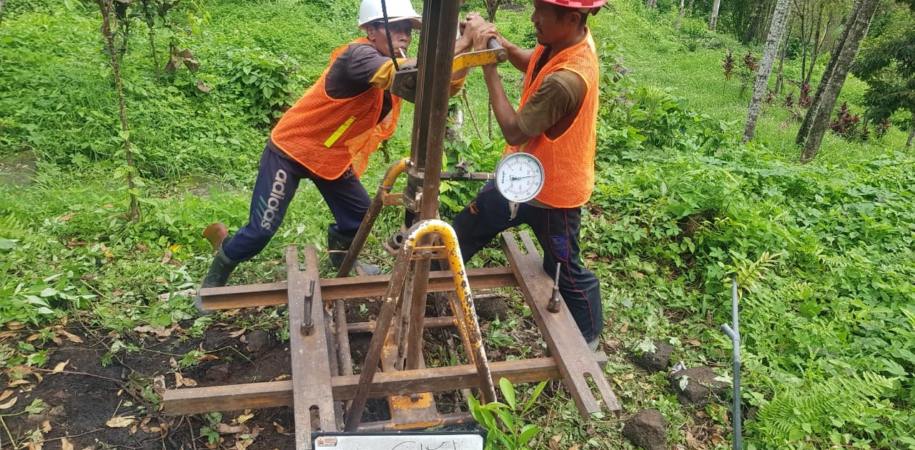

One of the most important questions from property developers and landowners across Bali is this: what is the SPT boring test Bali and when exactly do You need it? The answer depends on Your project type, depth of construction, structural load, and local soil conditions. This guide breaks down everything You need to know in a clear, practical, and honest way.
Before You commit to any construction budget, understanding subsurface conditions helps You plan smarter. A proper SPT boring test Bali investigation upfront can prevent enormous structural failures and financial losses down the road. Let us walk You through the full picture.
What Is the Standard Penetration Test (SPT)?
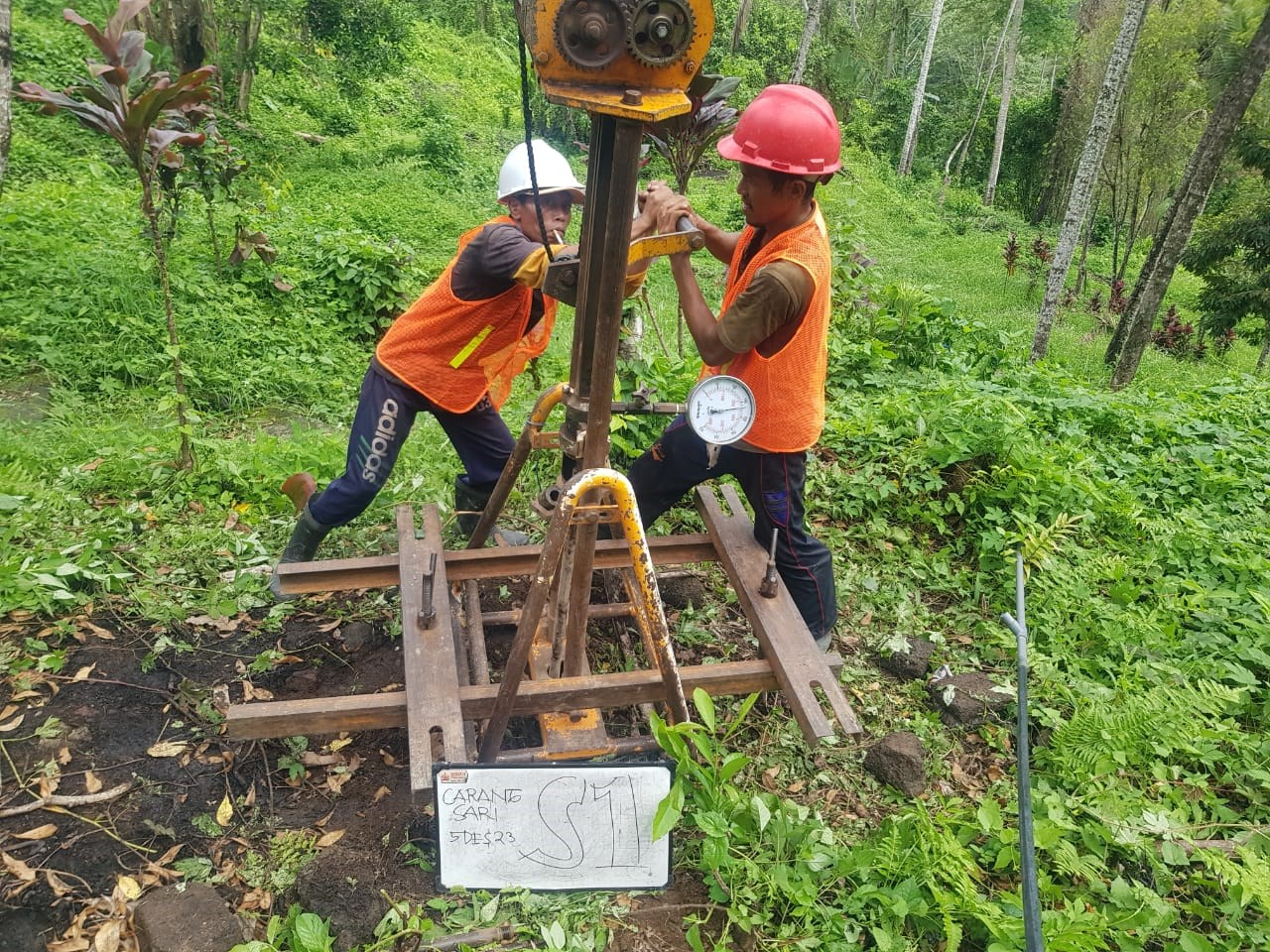
The Standard Penetration Test, commonly referred to as SPT, is an in-situ geotechnical field test designed to measure the resistance of soil to penetration at various depths. According to ASTM D1586/D1586M, SPT is currently the most frequently used subsurface exploration drilling test performed worldwide. The test provides soil samples for identification purposes and delivers penetration resistance data that engineers use directly in geotechnical design.
In the context of Bali construction, the SPT boring test Bali is specifically critical because local geology includes layered volcanic tuff, lateritic clays, sandy coastal formations, and highly variable fill materials. As a result, no single foundation type fits all Bali sites, and SPT data is what guides that decision accurately.
How Does the SPT Boring Test Procedure Work?
The SPT boring test Bali follows a standardised international procedure. First, a borehole is drilled to the target depth using rotary or auger drilling equipment. Then, a split-barrel sampler is inserted into the borehole and connected to a drill rod system.
A 63.5 kg hammer is dropped from a height of 760 mm repeatedly to drive the sampler into the soil. According to GeoEngineer.org, the number of blows required to penetrate the second and third 150 mm intervals is recorded as the N-value, or standard penetration resistance. If the N-value exceeds 50, the test is stopped and recorded as a refusal, which typically indicates very dense soil or rock.
Indo Soil’s field teams in Bali use modern, calibrated drilling rigs to ensure consistent energy delivery per Eurocode 7 (EN 1997) and ASTM standards, eliminating the common energy variability errors that plague outdated equipment setups.
| Step | Activity | Standard Reference |
|---|---|---|
| 1 | Drill borehole to target depth (typically 1.5 m intervals) | ASTM D1586 / SNI 4153:2008 |
| 2 | Insert split-barrel sampler into borehole | ASTM D1586 / ISO 22476-3 |
| 3 | Drive sampler with 63.5 kg hammer falling 760 mm | ASTM D1586 / Eurocode 7 |
| 4 | Record blow count per 150 mm increment (3 intervals) | ASTM D1586 |
| 5 | Sum blows for intervals 2 and 3 to get N-value | ISSMGE / ASTM D1586 |
| 6 | Retrieve disturbed soil sample for lab analysis | ASTM D1586 / SNI 1975:2012 |
| 7 | Repeat at every 1.5 m or at change in strata | FHWA GEC No. 5 |
| 8 | Compile boring log and generate SPT report | ASTM D5434 / SNI 4153:2008 |
Understanding N-SPT Values and What They Mean for Your Project
The N-value is the core output of any SPT boring test Bali investigation. Engineers interpret this number to classify soil consistency and determine the bearing capacity of the ground. Consequently, higher N-values generally indicate denser, stronger soils that can support heavier structural loads at shallower depths.
According to the International Society for Soil Mechanics and Geotechnical Engineering (ISSMGE), SPT N-values have been used for decades to predict load capacity of foundations, assess liquefaction risk, and characterise soil layers from cohesive clays to cohesionless sands. Understanding Your N-value profile is therefore the first step to choosing the right foundation type for Your Bali property.
| N-SPT Value | Soil Consistency (Clay) | Relative Density (Sand) | Typical Foundation Recommendation |
|---|---|---|---|
| Less than 2 | Very Soft | Very Loose | Ground improvement required; avoid spread footing |
| 2 to 4 | Soft | Loose | Deep piling; soil reinforcement advised |
| 4 to 8 | Medium Soft | Medium Loose | Deep foundation; engineer review required |
| 8 to 15 | Medium Stiff | Medium Dense | Shallow to medium depth foundation possible |
| 15 to 30 | Stiff | Dense | Spread footing feasible with engineering design |
| 30 to 50 | Very Stiff | Very Dense | Shallow footing with high bearing capacity |
| Greater than 50 | Hard / Refusal | Rock / Very Dense | End-bearing pile on rock; minimal settlement risk |
According to FHWA Geotechnical Engineering Circular No. 5, SPT N-values must be corrected for overburden pressure and energy delivery ratio before being used in empirical design formulas. Indo Soil’s engineers in Bali apply these corrections automatically, ensuring Your report reflects accurate, design-ready data.
When Is an SPT Boring Test Required for Your Bali Project?
Not every project in Bali requires an SPT boring test Bali, but many do, especially as structural complexity increases. Furthermore, regulatory requirements under Indonesia’s building permit framework (PBG and SLF) increasingly mandate geotechnical investigation reports as a prerequisite for permit approval.
You should commission an SPT boring test when Your project involves buildings taller than two storeys, foundations at depths exceeding 5 metres, sites with visible ground settlement or soft zones, cliff-edge or coastal construction with uncertain subsurface conditions, or commercial infrastructure such as hotels, villas, resorts, and mixed-use developments. Additionally, if Your architect or structural engineer has specified geotechnical data in the design brief, SPT boring is typically the minimum standard required.
According to the Eurocode 7 framework (EN 1997-2), SPT is explicitly listed as a standard field test for planning and reporting ground investigations. It is required for a broad range of commonly encountered foundation and structural engineering purposes. Therefore, aligning Your Bali project with international best practice means conducting SPT at the appropriate stage of design.
Chat directly with the Indo Soil team for a free consultation.Chat on WhatsApp Now
SPT vs CPT: Key Advantages of SPT Boring in Bali Conditions
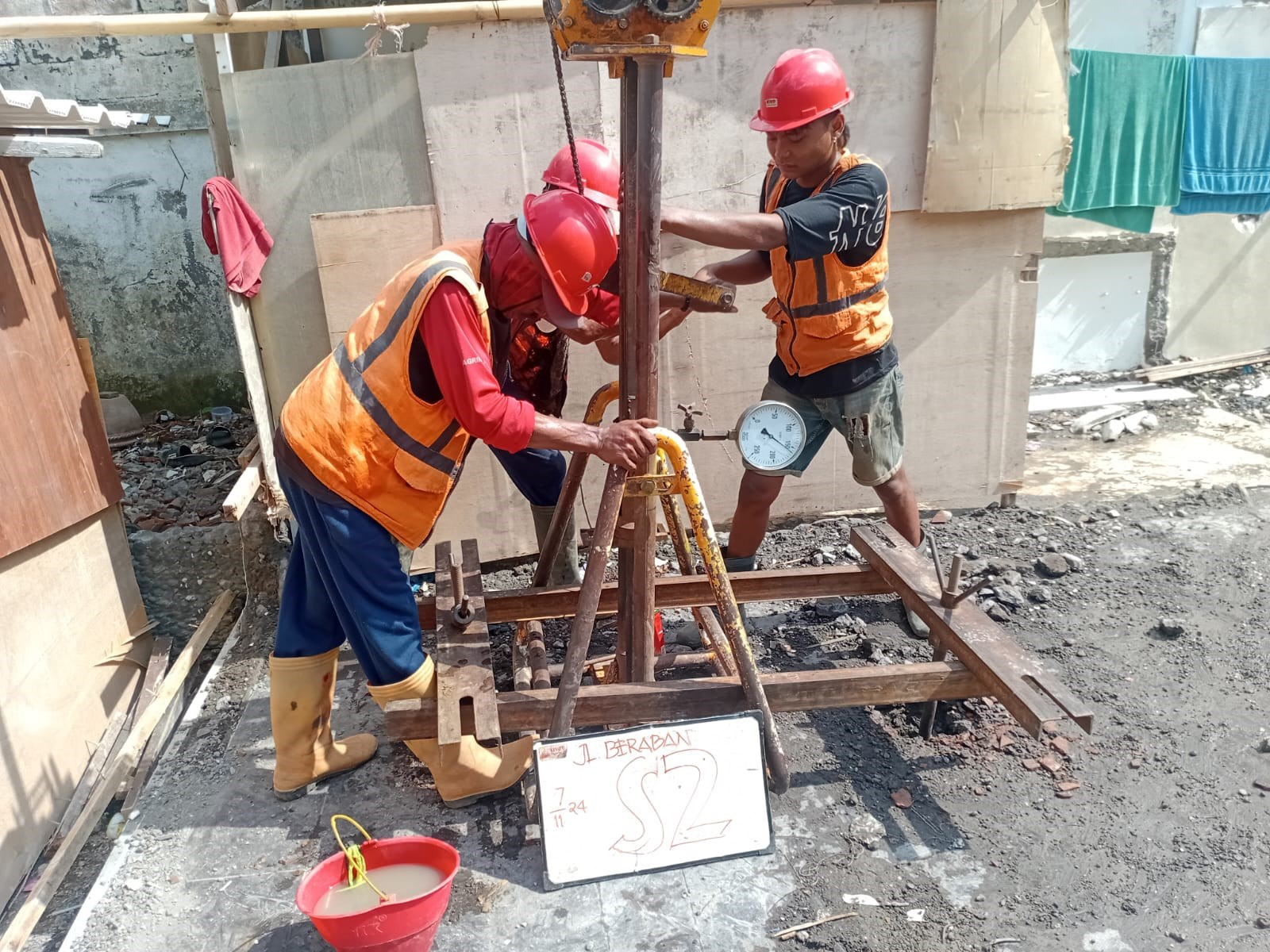
Bali engineers frequently debate whether to use SPT boring or CPT (Cone Penetration Test) for a given project. Both methods are internationally recognised and valuable. However, SPT offers specific advantages that make it more suitable for certain Bali project types.
The most significant advantage of SPT is that it retrieves actual soil samples. Unlike CPT, which measures resistance continuously without collecting physical material, SPT delivers disturbed soil samples from every test depth. These samples can be sent directly to a geotechnical laboratory for classification, moisture content analysis, Atterberg limits testing, and grain size analysis. Consequently, SPT gives You both quantitative resistance data and physical evidence of what the soil actually looks like at depth.
Furthermore, SPT boring is more adaptable to challenging Bali terrains. In areas with coarse volcanic gravel, rocky layers, or mixed fill, CPT probes can experience refusal or damage. SPT drill rigs can push through such layers using casing, making it the preferred method for complex subsurface profiles found across Badung, Gianyar, and Buleleng regencies.
What Does an SPT Report Contain and How Do Engineers Use It?
After Your SPT boring test Bali is completed, the deliverable is a formal geotechnical report that serves as the technical backbone of Your foundation design. Understanding what is in the report helps You work more effectively with Your structural engineer and architect.
A complete SPT boring report from Indo Soil includes the borehole log showing soil layer descriptions at every sampled depth, N-SPT values plotted against depth, groundwater table observations, laboratory classification results from retrieved samples, and a foundation recommendation section. The report is prepared in both English and Indonesian and delivered in PDF format within 5 to 7 working days.
Engineers use SPT data to calculate safe bearing capacity, estimate settlement under structural load, assess liquefaction risk in seismic zones, and select the appropriate pile type and depth. As noted by the Federal Highway Administration (FHWA), subsurface investigation data from SPT is critical for establishing soil and rock design parameters used across all stages of construction.
SPT Boring Services by Indo Soil in Bali
Indo Soil is a professional geotechnical services provider based in Bali, operating from the Alamanda Building, Jl. By Pass Ngurah Rai No. 67, Kedonganan, Kuta, Badung. With over 10 years of experience and more than 100 completed projects across Bali, Lombok, and eastern Indonesia, our team delivers reliable, standards-compliant SPT boring investigations for every project type.
Whether You are building a boutique villa in Seminyak, a resort on the Uluwatu cliffs, a commercial complex in Denpasar, or a residential estate in Canggu, Indo Soil provides the SPT boring test Bali data Your project needs. Our reports are accepted by structural engineers, architects, local government offices, and international project stakeholders.
| Package Name | Price (IDR) | What is Included | Delivery |
|---|---|---|---|
| Basic Soil Test Package | Rp 4,000,000 | 3 CPT points (0 to 5m), rapid field test, PDF report in English and Indonesian, initial foundation recommendation | 5 to 7 working days |
| Business Starter Package | Rp 7,500,000 | Topographic survey (contour lines, cross and longitudinal profiles) plus 3 soil test points (0 to 5m), full technical report, PDF and CAD (DWG) output | 5 to 7 working days |
| SPT Boring Standard | Price on request | Borehole drilling 5 to 20m, SPT included, soil sample extraction for lab analysis, foundation recommendation report | 7 to 14 working days |
| SPT Boring Deep Investigation | Price on request | Borehole drilling up to 30m, full borehole log, lab testing, PDF and CAD report, ideal for high-rise and resort structures | 7 to 14 working days |
Furthermore, all Indo Soil packages include a free initial consultation to determine the most appropriate testing scope for Your project. Our team advises on the number of test points, required depths, and which combination of SPT boring and CPT sondir will give Your engineer the most complete picture of Your Bali site.
SPT Boring for SLF and PBG Permit Applications in Bali
If Your Bali construction project requires a Building Ownership Certificate (SLF) or Building Construction Permit (PBG), Your geotechnical data will be reviewed by local authorities. In many cases, an SPT boring report is a mandatory attachment to Your permit application, particularly for structures of two storeys and above.
Indo Soil prepares all SPT boring test Bali reports in a format that meets Indonesian regulatory requirements. Reports are issued in bilingual format (English and Indonesian), include all required technical annexes, and are prepared by certified geotechnical professionals. As a result, You can submit Your permit application with confidence, knowing Your subsurface data meets both local regulatory standards and internationally accepted methods such as ASTM D1586 and SNI 4153:2008.
Conclusion
The SPT boring test Bali is not simply a technical formality. It is a fundamental safeguard that protects Your construction investment, ensures structural safety, and keeps Your project compliant with both local and international standards. From determining N-SPT values and soil classification to guiding foundation design and supporting permit applications, SPT boring delivers the critical subsurface information that every serious Bali construction project needs.
Indo Soil has supported over 100 projects across Bali with professional, standards-compliant SPT boring investigations. Whether Your project is a private villa, a cliff resort, or a commercial development, the right soil data from the start saves You time, money, and structural risk in the long run. Therefore, do not leave Your foundation to guesswork.
Ready to get started? Contact Indo Soil today for a free consultation and transparent quote.Get a Free Consultation Now
Frequently Asked Questions (FAQ) About SPT Boring Test in Bali
Q1: What is the difference between SPT boring and sondir (CPT) in Bali?
Q2: How deep does an SPT boring test typically go in Bali?
Standard SPT boring in Bali typically ranges from 15 to 30 metres. The required depth depends on Your structure type, the expected depth of hard bearing strata, and the requirements of Your structural engineer. Indo Soil’s team will recommend the appropriate depth after reviewing Your site and project brief.
